
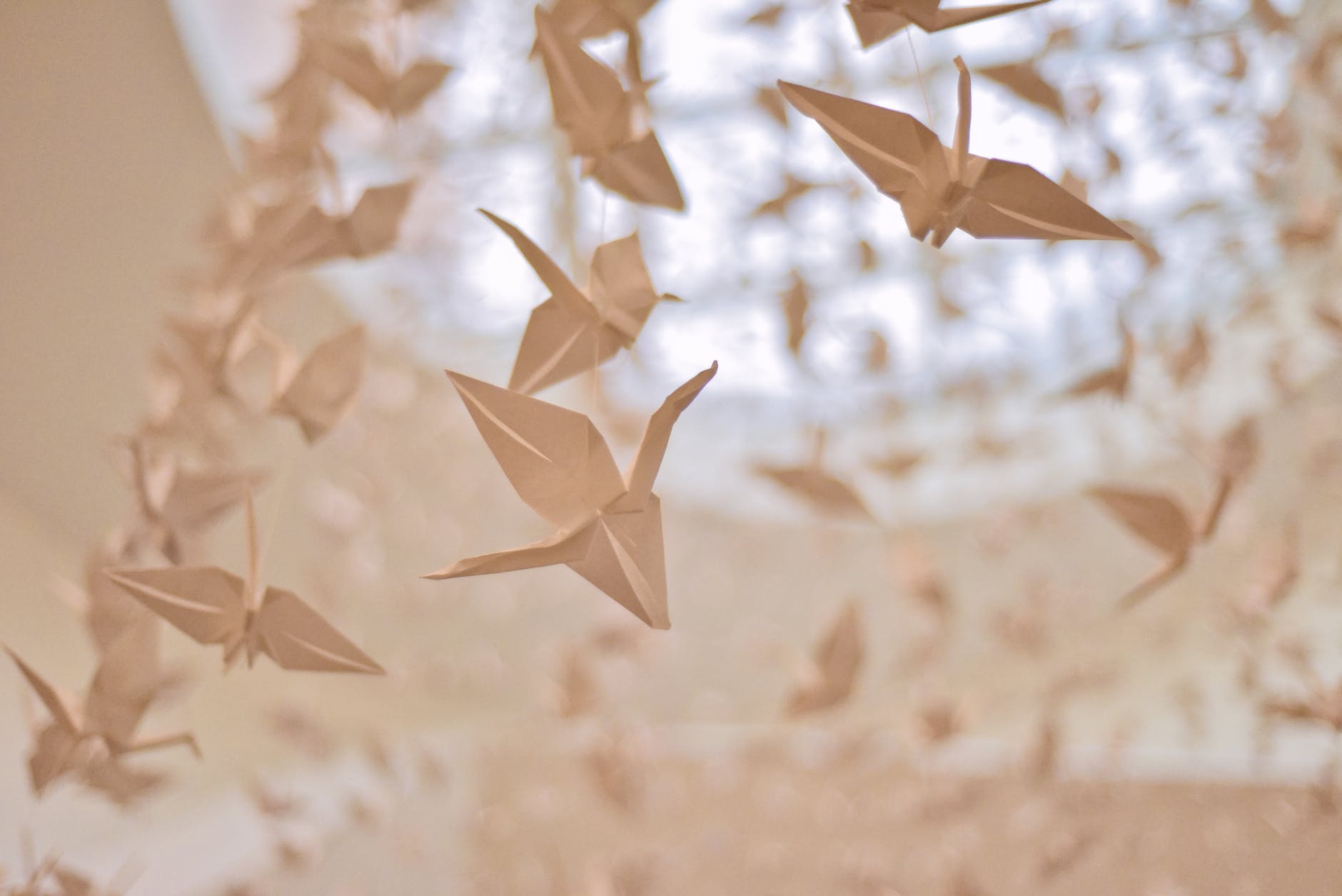
In 3rd grade, some students are asked to read Sadako and the Thousand Paper Cranes. The story is based on the life Sadako Sasaki, a young girl who is diagnosed with leukemia after being exposed to radiation caused by the atomic bombing of Hiroshima. In the book, which differs slightly from her real life story, Sadako’s friend tells her of the Japanese legend of having your wish granted after folding one thousand origami cranes. It is said that “cranes live a thousand years” and folding one thousand paper cranes represent one crane for each year of life.
Cranes don’t actually live a thousand years, but the saying is meant to be poetic and symbolic in nature and means longevity, health and good fortune.
When I read this book to my daughter, we decided it would be fun to try and fold one thousand cranes. That is, I thought it would be fun. Perhaps it’s the simplicity in folding paper, perhaps it’s that the finished product only takes about 3:00 minutes on a good day, and, perhaps it’s because when I traveled to Japan as an athlete, I loved everything about their culture.
The patterns of fabric, the cherry blossom trees, the mountains and the bustling city of Tokyo all hold memories and intrigue. One thing that makes folding origami fun, is choosing the paper. Some paper is a solid color; it’s slightly thinner than standard printer or notebook paper – this is called kami and is the most well known kind of origami paper. Handmade Japanese paper is called washi paper. Washi paper is usually single-sided with a pattern on one side and white (or off white) on the other side. This paper can be a bit rough to the touch and sort of mushy, or maybe pulpy is a better explanation, but it folds incredibly well and you get a beautifully finished product. The last kind of paper is metallic. It’s shiny metallic on one side and white on the other side. You can fold cranes or other origami with any of these papers.
For me, it’s as much about selecting the paper as it is about folding the crane. The more unique the pattern, the better. Packs of paper usually have the same four or five patterns and each pattern will have three or four color-ways. So there’s maybe 20 pieces in one pack. Looking and shopping for unique origami paper at art supply or Japanese concept stores is an addicting endeavor.
Folding cranes keeps my hands busy and my mind still. The perfect combo for an over-thinker.
So why fold paper cranes? Athletes (maybe this is you) and coaches (or you) are always thinking. We are constantly looking for ways to optimize or improve or make better. This is super cool because it does lead to better and better usually feels pretty good; but we can optimize to a fault. During some of my coaching years, folding cranes helped me from over-processing or over-thinking the simple stuff: a lineup, a practice plan, a frustrating loss, team dynamics that feel off, or, even my life off the court.
Folding became a practice I did during the thick of a season. I folded early in the morning (one or two cranes) before training as a way to remind myself of the simple things – like, my hands are capable of making beautiful things, or, it’s cool to make and produce something that no one else will see just for my own enjoyment. If I had more time, say on a plane headed to Boise State, I’d bring a bag of paper and fold cranes instead of being on my phone. On one flight, I folded over 30 cranes and gave one to a flight attendant who seemed to have been having a very long day. A simple paper crane brought a smile across her face.
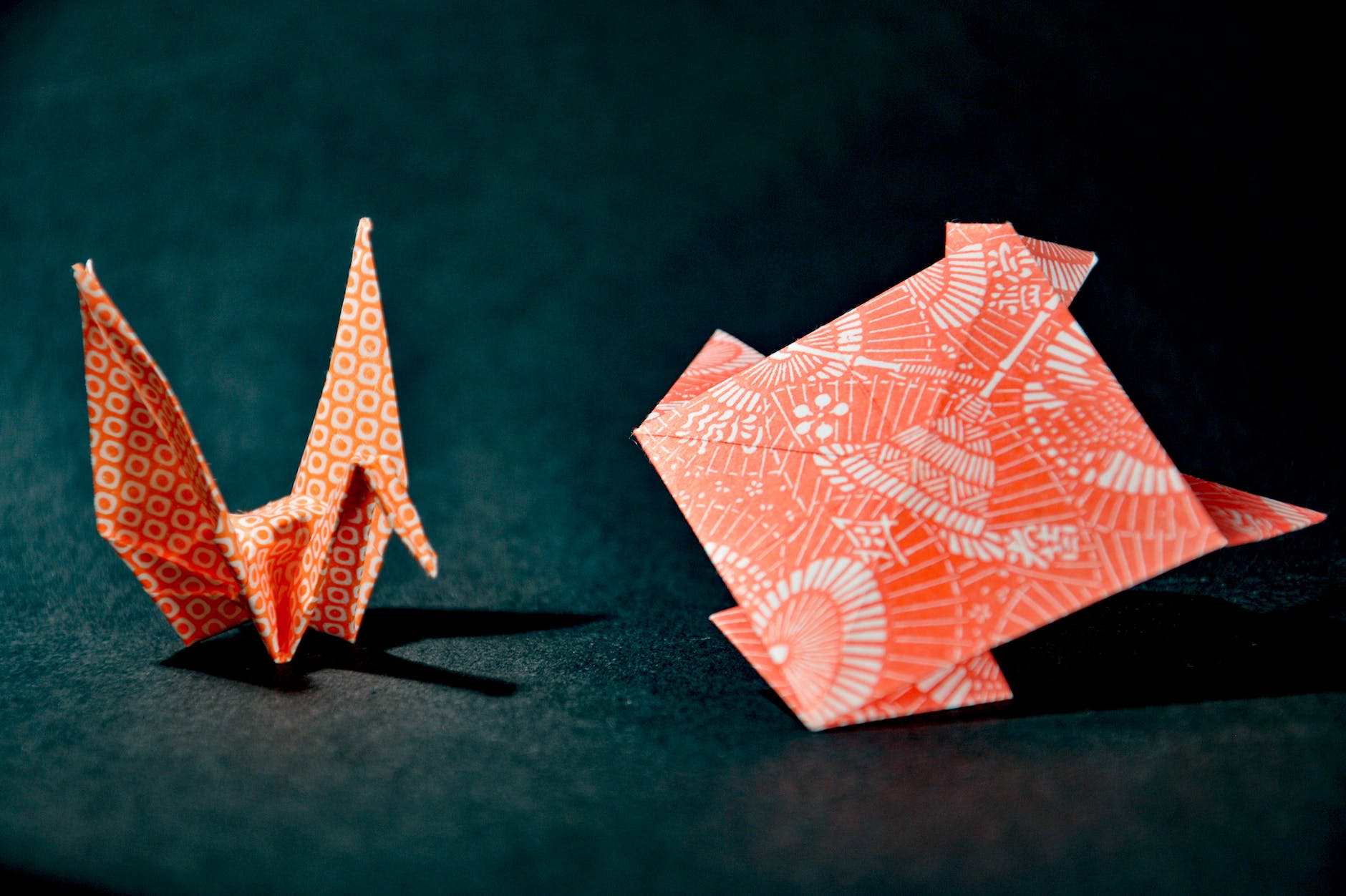
The paper crane folding life seized me sometime during the summer of 2020, and I have 805 beautifully colored cranes to date. Some days I fold more than other days, but mostly, folding cranes keeps my hands busy and my mind still. The perfect combo for an over-thinking, former athlete with a very busy mind. While one thousand is the goal, I’ve never told my self I have to be done in a certain amount of time. Origami, like gardening, is about the process. It is about the beauty in each crane or each lesson. It’s about a story of a Japanese girl who wanted to live through her disease long enough to fold a thousand cranes and make her wish.
And, I guess I’ll make a wish when I finish.
(I hope this post inspires you to look up Sadako’s story, to read Sadako and the Thousand Paper Cranes (based on a true story), or even to begin folding origami. The information about paper came from paperjade.com and has a wide selection of paper and information about origami).
Coach Tallman has been involved in high performance sports all her life. As an athlete, Priscilla played at the University of Georgia and earned 1st team All-Conference for all four years, including SEC Freshman of the Year and SEC Player of the Year. She also earned 1st Team All-America honors her junior and senior years at UGA. She went on to play on the USA National team, USA World University Games and professionally in Europe. In 2006, she was inducted into the prestigious Georgia Athletics Circle of Honor for excellence in representing her sport and the University.
Coach Tallman has also coached at the high school, club and collegiate levels as a coach and has worked with every level of sport, including professional volleyball athletes as a mindset and mental performance coach.
She combines her knowledge of Sport Psychology principals and her education in Clinical Psychology to bring increased performance as well as education and resources for mental wellness in student-athlete populations.
She has an undergraduate degree in Psychology from The University of Georgia and a Master’s Degree in Clinical Psychology from Vanguard University. Her “30 Day Champions” Journal was studied and researched by graduate students from The College of Health Solutions at Arizona State University in Spring, 2022 and has been used by over 1,000 athletes, coaches and parents.
 SpikeDr.com