I’m Not Anxious, You’re Anxious: 3 Tips For Athletes (Who Aren’t Anxious)

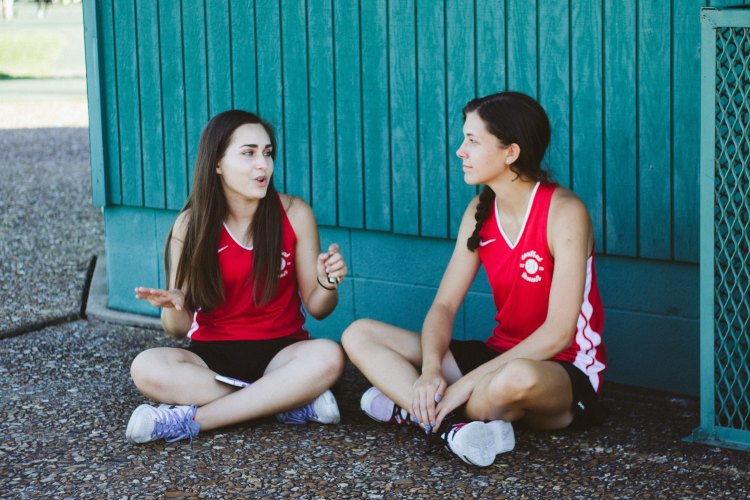
Anxiety is a normal human process. We inherited it from our ancestors who needed it to survive in a pre-historic era of actual, constant danger. Our ancestors, however, weren’t anxious because a bear or lion gave them the side eye, trashed their loin cloth on social media or because they didn’t want to miss the championship winning shot. They were anxious because they needed to survive. While anxiety can and does serve a purpose, it can also be triggered when there is not any actual danger.

Learn how to spot the difference and how to train your anxiety just like you train any other muscle in your body – with consistency, intentionality and lots of reality.


Reality Check: “If I lose this game, I’m a loser.” “If I make a mistake, my teammates will be mad at me and the loss is my fault.” “If I fail this test, I’m stupid and won’t be successful in life.” You may be thinking “why would anybody think that stuff?” After all, it’s just a game or it’s just a test, right? Well, kinda. Anxiety and depression (related cousins causing all kinds of emotional disputes) thrive on these types of distorted, automatic thoughts. A misread glance or facial cue, body language or even the tone of someone’s response can set off what cognitive behavioral therapists call “automatic thoughts.” Not all automatic thoughts are bad, for instance, you see a bear when you are camping and your first thought is “I am not safe, I need to get out of here.” That thought will likely save your life. But let’s say it’s the last play of the game to determine the winner of the match and you think “I am not safe. If I miss this shot, the whole game is my fault. My team, coach and parents will think badly of me. I am a loser if I don’t get this point.” Those thoughts have nothing to do with life or death, they are perceived danger. They feel true, but they aren’t always true. Automatic thoughts happen instantly, can spread like wild-fire and get us “stuck” if we don’t do some reality checking. Reality checking is just that. Checking your thoughts for truth.

HERE’S HOW: As soon as you think the negative/automatic thought. STOP. Write it down or put it aside mentally. Then ask a question. “What am I feeling right now?” “What is making me feel this way?” “Is this thought true?” “Have I checked this thought for the truth?” “Have I spoken to the person I think is mad at me or am I making assumptions?” The longer we travel down the road of automatic, distorted thoughts, the more they become our unhealthy truth. We can train ourselves to stop the loop of thoughts if we are intentional about where we allow them to go.

Breathe: Four square breathing, belly breathing, deep breaths. While our bodies do a great job of regulating how fast or slow we need to breathe to sustain our lives, an external stressor such as a test, an unfamiliar social setting, a tight score in a game can change that in an instant – combine that with distorted automatic thoughts and you may get an increase in heart rate and fast, shallow breathing. For some people a big test, public speaking, or a tight match/game may be the push they need to get out of their comfort zone and try something new and challenging. For an anxious person, however,  it may cause them to “freeze up” or feel afraid/in danger. A few deep breaths before serving for match point, might refocus your attention for the few seconds you need to get your mind off your thoughts and your body plugged back in to the play.

HERE’S HOW: Take some quiet time to listen to your breathing. Place one hand on your chest and one hand on your belly. Breath normally and see which hand rises. Shallow breathing will draw air into your chest causing the hand on your chest to rise. Belly breathing draws air into your diaphragm causing the hand on your belly rise. Try taking three deep belly breaths once a day to start and then practice a couple of times a day. I’ve practiced this for more than fifteen years and find it is second nature these days when I’m feeling anxious.

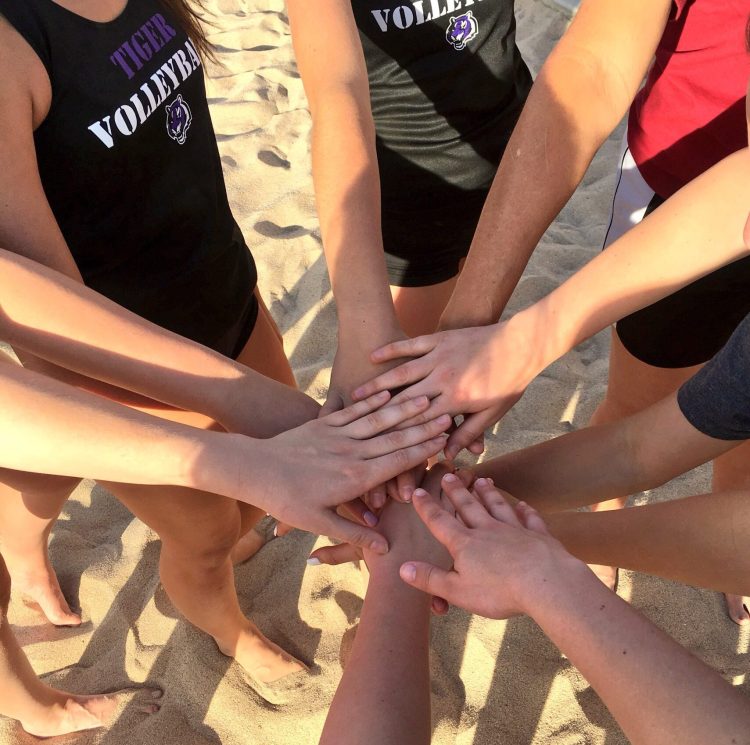
Head up, Eyes up, High Fives (Interconnectedness): Interconnectedness is one of the most overlooked ways to feel less anxious. With the rise of technology and screen time, it seems like we are more “connected” than ever before, when in reality it’s only a perceived sense of connection. Human connection, even for the most introverted of folks, is vital to a healthy, emotionally-balanced life. Yeah, human beings, relationships, teams and emotions can be messy. But knowing we are not alone in the mess is a powerful feeling. When you feel down on yourself, where do your eyes look? When you are ashamed or feel guilty, what is the position of your head? The physical act of picking up your head and looking another person in the eyes and communicating “I’m still here and so are you” without saying a word can ease anxiety in team environments. It’s the notion that we are seen and that we aren’t alone in the battle, we are in this thing together. We are connected. Oh yeah, high fives help too.

HERE’S HOW: Try to get twenty-five high fives between you and your teammates over the course of a practice or a match. Make concerted efforts to slap a hand after a mistake or something positive. Keep your head up, make eye contact and say a quick “let’s gooooo” when you can between plays.


Disclaimer: I am not a licensed therapist, these are my opinions only. If you struggle with anxiety or depression, get help and talk to a professional therapist. Some of this can be managed on your own, but nothing can replace the expertise of a professional licensed therapist.  While seeing a therapist may not last a lifetime, the skills and strategies you learn most certainly will. As always, never underestimate the power of NUTRITION, SLEEP and EXERCISE in managing anxiety.


Priscilla Tallman is a freelance writer in Phoenix, AZ. She has an undergraduate degree in Psychology and graduate degree in Clinical Psychology. She has written for FloVolleyball, Volleyball Magazine, The Art of Coaching Volleyball, Sweat RX, Gorgo Fitness Magazine, CrossFit Fury, The CrossFit Games and OPEX Fitness. She was an 2x All-America volleyball player from the University of Georgia, NCAA statistical leader, SEC Player of the year and was inducted into UGA’s Circle of Honor in 2006. She has played on the US National Team and enjoyed a bit of professional ball in Europe and on the beach. She is married with two children and currently coaches high school beach and indoor volleyball. 

ADDITIONAL RESOURCES:

Automatic Thoughts,

Mindset Training,

Cognitive Behavioral Therapy (Self-Help),

Cognitive Behavioral Therapy (CBT Overview)

Mind Over Mood, Second Edition
 

Coaches in China Shops – What’s Your Role in Coaching Youth Sports?

Two years ago, I made the decision to get back into coaching. I didn’t come from a particularly decorated coaching career (if you can even call it that). A short three-year stint as a club coach in Southern California for a 16-3’s team and one season as the 4th assistant at Long Beach State (basically a practice dummy who hit a hundred balls at the end of practice against a live defense) in my twenties isn’t really a top-notch coaching pedigree. But, it was enough time to decide it wasn’t for me and I stepped away for almost twenty years.

But after a graduate degree in clinical psychology, a couple-three years in therapy, marriage, children and enough time in between to really miss the sport that gave me so much, I found myself dipping my toe into the proverbial coaching pool with clinics and guest appearances here and there. I finally jumped in with two feet and began coaching with a local high school team.

Since then, I have taken an intentional and consistent approach to defining my value and purpose for coaching and have seen an inside look at what our teenagers/high-schoolers are dealing with on a daily basis (even though I’m an off-campus coach, I still see and hear quite a bit).


Let me tell you. I was a competitive athlete. I like to win. I FEEL frustrated when my teams don’t win. I FEEL competitive and inferior when I don’t coach to my potential. I beat myself up and overthink losses (so, you don’t have to, thank you very much) and see where I can learn and adjust.

WHEN I feel these things, I have the same triggers that probably all coaches have – to work the kids harder, to yell louder, to run more lines, to require a bigger commitment, to change WHO I AM for the win.

But you know what? I AM AN ADULT. I know better. I know what these kids need isn’t another person requiring them to sign their life away to be a part of my team. I coach high school beach volleyball. In the current landscape most of my players are in season for either club indoor or club beach volleyball while they also play on their high school teams. They also have lots of homework, travel for their club sports, family and friend dynamics and everything else that teenagers deal with socially, mentally, emotionally and physically.

I CAN ask these kids to give me everything they are giving everybody else, but I CHOOSE not to. Now, this isn’t to say we don’t work hard in practice or that I don’t teach them everything I can about the game and about winning and about life. I spend hours a week planning practices, educating myself on a sport that is growing faster than I can keep up and researching ways to keep their bodies healthy through nutrition, strength, conditioning and recovery. I’m not a pushover and I know what it takes to be successful, but I’m not going to compromise my values or what I am about to win.

Sorry.

Not sorry.

At all.

When I decided to come back to coaching, I decided to come back as a resource. As a mentor. As someone who is flawed, makes mistakes, but cares deeply about these kids, their goal and what they want to accomplish through sports. I also care about my own process, what I put back into the sport and what kind of influence I want to be – though I don’t have control over what people think of me, I do have control over my ego.


My purpose as a coach is to help as many kids as possible achieve their goals through volleyball no matter how big or small.

You don’t have to do it this way, you can nitpick every point and yell after every loss and focus on talent – that’s your choice.

But in light of the way our teens are experiencing a culture of academic and social stress, I’m choosing to be part of the solution.

As adults, we can’t all demand the same standard out of the same kids everywhere they go. I mean, we can – but eventually the system doesn’t hold and it’s usually the kid that suffers. This doesn’t mean you have to be a pushover or be afraid to let your kids fail or be afraid to push them to experience new potential – it doesn’t mean you treat them like tea cups, but it does mean you don’t have to be a bull in a china shop to get results.

Here’s what I’ve learned: it’s amazing what you can still get from a kid when you show them you truly care about them instead of just value them for what they can help you do. Believe me, they know the difference.

How can you make a difference in the lives of the kids you influence? What mistakes and adjustments have you made and courses of action have you traveled to be the best resource for your teams? What are your values as a coach? How do you intentionally and consistently stick to these values among setbacks, losses and team dynamics? What do you learn about yourself after a frustrating loss?

Let’s know why we do what we do, especially at the youth level.


Priscilla Tallman is a freelance writer in Phoenix, AZ. She has an undergraduate degree in Psychology and graduate degree in Clinical Psychology. She has written for FloVolleyball, Volleyball Magazine, The Art of Coaching Volleyball, Sweat RX, Gorgo Fitness Magazine, CrossFit Fury, The CrossFit Games and OPEX Fitness. She is married with two children and currently coaches high school beach and indoor volleyball. Though she doesn’t LIKE TO YELL in practice, she typed in all caps for emphasis. She’s not yelling at you either. 


ADDITIONAL RESOURCES: for more information on my ever-expanding philosophy on coaching, listen to Episode 50 of the Better Than Yesterday podcast with Jake Thompson.

Identity and Self-Worth in Sports

This is not another article about how you are more than your sport.

This is not a post about how identifying with your sport is a bad thing and that you need to find balance.

This is a post about you, having made an informed decision to play/commit to a sport you love, are (yes) a human being first, but also, perhaps, very much an athlete.

This post is about your identity as an athlete (and why that’s okay) and your self-worth as a human being and how to separate the two.


YOUR IDENTITY AS AN ATHLETE

“I had teachers who said I was not good enough. So, I said I will become good enough. So, I became this guy who become obsessed to become good enough. Now I sit down and tell people who I was. Now I say ‘Do you know who I am?” Herschel Walker.

I played a little volleyball in my life. I wasn’t the best volleyball player there ever was, but I played at a high level and achieved enough success to identify myself as a volleyball player for more than half my life. In high school, I discovered this identity kept my shyness at bay. In college, I discovered I didn’t really need any other identities. At the top of my career, I discovered those paying me to play needed me to identify as a volleyball player. Not a problem.

And, it’s easy for me to slip back into that identity when I’m around other athletes. Here’s a recent exchange I had with another former volleyball player:

Fellow Former Student Athlete: Were you a pretty good student in college? Did you know what you wanted to major in when you were in high school?

Me: I went to college to hit volleyballs.

Both of us: lolz

I say this tongue in cheek, but being a student was not my main identity in college, being an athlete was. I did what I had to do to stay eligible and I did what I had to do to graduate college in four years and I did just that (turns out I really did more than just hit volleyballs). See, our identity is something we do, something we are, something we’re probably good at and those things are going to supersede pretty much everything else.

Try this. Answer the following questions to see where you might be placing your identity:

  • What things am I good at?
  • What things do I spend most of my time doing?
  • What am I passionate about?
  • How would my friends and family describe me?

While this might not be everything you identify with, it will probably hit the biggies. For example: I am a mother, a wife, an athlete, a coach and a friend.

But our identity can sometimes be co-dependent. Let me explain.


YOUR SELF WORTH

“Growing up, I started developing confidence in what I felt. My parents helped me to believe in myself. I wasn’t the best looking guy, I wasn’t the best athlete in the world, but they made me feel good about myself,” Herschel Walker.

Self worth is not self esteem. It is not confidence and it is not your identity. While our identities are ever-changing and ever-evolving, self-worth is rooted a little deeper and the two can be so closely intertwined at times they seem like the same thing.

Self worth is how we determine our value.

It’s what makes us feel worthy. There are many contributing factors to this (including our identity), but, parents, peers, boyfriends, girlfriends, coaches, mentors, clergy, culture, belief system, teachers, siblings or employers all play a part in shaping our self-worth. Our self-worth is, in part, character traits, virtues, our values, our ethics, and our belief system to name a few.

Answer the following questions to see how you might determine your self-worth (hint: use character traits or virtues instead of identities or roles you play):

  • What makes me valuable?
  • Why do people like spending time with me?
  • What do people say are my best characteristics?
  • What is my best character trait?
  • How would my friends and family describe me?

How did you do? Some of your answers might look like this: I am kind, I persevere though hard things, I listen well, I am compassionate, I share authentically, I have good work ethic.

Unfortunately, if we receive mixed messages from important people, we might say things like this: I am worthless unless I win my games, I don’t have value if I don’t perform well, my friends only like me because I am good at sports.

Unlike identity, self-worth takes time to develop and it begins in early childhood development. If you struggle with a low sense of self worth, my guess is most of what you think isn’t true, but you can get help. Sports psychologists, therapists, counselors, mentors and conversations with other athletes who have wrestled with the same topics are some great places to start.

THE BOTTOM LINE

It okay to identify with your sport, some of us need that to compete and achieve our goals. Remember, however, your identity is ever-changing and ever-evolving but your self-worth can get stuck in a bad place if you allow the two to be one in the same. Start looking at how you add value to the world and people around you, it might be through sports and it might be through something else, you just have to be willing to look closely enough to see it.


Priscilla Tallman is a freelance writer in Phoenix, AZ. She has an undergraduate degree in Psychology and graduate degree in Clinical Psychology. She has written for FloVolleyball, Volleyball Magazine, The Art of Coaching Volleyball, Sweat RX, Gorgo Fitness Magazine, CrossFit Fury, The CrossFit Games and OPEX Fitness. She is married with two children and in a former life played collegiate volleyball at the University of Georgia where she was given the nickname “The Spikedoctor” by their Sports Information Director – because, you know, she could hit volleyballs.

Additional resources on Identity and Self Worth:

Understanding Athletic Identity, Rebecca Symes

When You Lose Your Sport, What Happens To Your Self?, Carey Goldberg

Is It Really Burnout?, Priscilla Tallman

Is it Really Burnout?

At the beginning of this year, we pulled the plug on Tae Kwon Do for our kids. We first started it for my son, who was four at the time, because it was recommended to us by our Occupational Therapist as a way to gain body awareness and develop some core strength. I was game, and my son loved it. What Ninjago-loving four year-old wouldn’t love the prospect of using nunchucks and yelling “kiya!” as they kick or punch into a padded mitt?

My daughter, who watched her big brother for two years before she was old enough to participate, quickly followed suit. We signed her up as soon as she turned three.

But, despite our joy in watching our kids and their joy in living out their real-life ninja fantasies, the Master had given us this early warning: “if this is their thing now, it will always be their thing. If this is not their thing now, you will know when to move on.”

(Okay, say it again in your best Mr. Miyagi or Sensei Wu voice).

It’s not like my kids didn’t like Tae Kwon Do anymore, or, as parents, we stopped enjoying the benefits or the instructor or whatever, whatever. It’s that my children started developing other interests and had opinions about what we signed them up for. They began saying things like, “I don’t want to go to Tae Kwon Do today” or “I don’t really like sparring” and, I agreed with this one, “this bag is too big.” For a while (like more than a year), we encouraged them to stick with it, told them they were learning so much and that these were good skills for them to have for other sports. But, eventually, it was time to bow out.

Were my kids burned out? Had I pushed them too hard? Were they on the verge of quitting sports all together?


“If children are encouraged and reinforced for their initiative, they begin to feel industrious and feel confident in their ability to achieve goals,” quoted in an article written by Saul McLeod, simplepsychology.org, 2015.

As a student of psychology in both undergraduate and graduate programs, I love the childhood development theories of Erickson, Piaget and Vygotsky, to name a few. Like any theory, these aren’t an end-all, be-all in childhood learning and development but they have helped me develop a framework to see my children (and those I coach) outside the scope of the athlete. Our children aren’t just football players or cheerleaders or scholars or black belts or musicians or chess champions or ballerinas, they are human beings first. Human beings that develop differently, if not, along a fairly predictable path toward adulthood, like those discussed in Erickson’s Psychosocial Stages of Development.

Though my children aren’t at the age we typically see burnout, they are at the age where they are learning whether or not their voice and opinions matter. They are in what Erickson calls Industry vs. Inferiority, the stage preparing them up to take initiative and resolve conflict and crisis in the years to come.

“If this initiative is not encouraged, if it is restricted by parents or teacher, then the child begins to feel inferior, doubting his own abilities and, therefore, may not reach his or her potential,” quoted in an article written by Saul McLeod, simplepsychology.org, 2017.

And who doesn’t want their kid to reach their potential? How many parents are afraid if they don’t start their kid early enough they will “miss their opportunity?” How many parents push their kids while simultaneously try to mitigate burnout?

How many coaching sites or private coaching groups post articles about burn out and/or parental pressure? How many articles have you seen titled: “Five Ways to Prevent Burnout?” “Why Your Child Should Play Multiple Sports to Prevent Burnout?” “How to Talk to Your Child In The Car Ride Home to Prevent Burnout?” “Five Foods and Television Shows to Prevent Burnout?” Just kidding, I made that last one up, but still.

American sports culture wants to grow the sport, prevent burnout, create multi-sport athletes who contribute to their communities and then scratches their head while high school sophomores and junior’s are leaving sports in droves. Perhaps what we are seeing isn’t really burnout at all. Perhaps it’s a combination of a bunch of things or something else all together.

HINT: (it is).


“The adolescent mind is essentially a mind or moratorium, a psychosocial stage between childhood and adulthood, and between the morality learned by the child, and the ethics to be developed by the adult” from Erickson’s 5th stage of development, Identity vs. Role Confusion.

To go back to Erickson’s stages of development, children between the ages of 12-18 (the “burnout” years) are navigating some really dicey waters. Not only do they have school pressures mounting, puberty knocking at their door, peer interactions becoming more and more important to them, their minds are also developing scripts they will use for the rest of their lives. They search for their sense of self and their personal identity. They decide which values, ethics and beliefs they will take from us as parents and reproduce back into their communities and among their peers. They learn not only from their home environments, but from peers, teachers, coaches, mentors and their friends parents (see supplemental reading link for Vygotsky’s Social Development Theory).

Kids in the burnout years aren’t only dealing with what sport they want to play, they are trying to figure out who they are. Sometimes that means their interests change. Sometimes it looks like burnout.

“In response to role confusion or identity crisis, an adolescent may begin to experiment with different lifestyles (e.g., work, education or political activities). Also pressuring someone into an identity can result in rebellion in the form of establishing a negative identity, and in addition to this feeling of unhappiness,” quoted in an article written by Saul McLeod,www.simplepsychology.org, 2017.

Which brings me back to my kids and Tae Kwon Do. My kids aren’t burned out. My kids weren’t being pushed too hard. If my kids loved Tae Kwon Do, nothing would have kept them from it and if they ever want to go back, they will. Looks like the early warning from our Tae Kwon Do Master was dead on: “If this is their thing now, it will always be their thing. If this is not their thing now, you will know when to move on.”


Priscilla Tallman is a freelance writer in Phoenix, AZ. She has an undergraduate degree in Psychology and graduate degree in Clinical Psychology. She has written for FloVolleyball, Volleyball Magazine, The Art of Coaching Volleyball, Sweat RX, Gorgo Fitness Magazine, CrossFit Fury, The CrossFit Games and OPEX Fitness. She is married with two children and in a former life played collegiate and professional volleyball; she can honestly say she never felt burned out by playing. She also currently coaches girls high school beach and indoor volleyball and strives to learn from and teach the next generation of amazing athletes. 


Supplemental reading on psychosocial child development:

Erickson’s Psychosocial Stages of Development

Piaget’s Cognitive Learning Theory

Vygotsky’s Social Development Theory

5 Things That Haven’t Changed About Volleyball

Six rotation outside hitters.

Liberos, defensive specialists.

Contesting a play to reverse the call.

Sideout scoring. Jump float. Kick saves.

Number of substitutions. Purple cards.

It’s safe to say our sport has changed quite a bit in the past decade.


As a former player turned coach who has been told way too many times “things are different now …” and “you come from a different era of volleyball …” I’m just gonna put this out there: while the sport, its rules, its physicality (and its parents) may have changed, there are a few things that haven’t.

CHAMPIONS ARE CHAMPIONS – it doesn’t matter what era you come from, a champion is a champion. How do you determine who the GOAT is for your sport? Statistics, data, court/field presence, leadership abilities, influence on the sport? You can analyze it and dissect it, but when you see it you know it and it’s hard to deny it. Think those players could compete by today’s standards? Who knows. Think those players would scrap, adapt and lead their teammates to empty the tank in every contest? Absolutely. Sport changes, the mental fortitude of a champion does not.

COMPETITORS RECOGNIZE COMPETITORS – 1917 or 2017 people who compete have always been people who compete. I’m not talking about people who are competitive for the sake of being competitive (i.e. that guy walking into Starbuck’s next to you who suddenly picks up his pace to get one spot in front of you in line), I’m talking about those people who compete with themselves. People who have goals no one knows about. People who live life by a different set of standards than everyone else and know the work it takes to uphold those standards.

Regardless of when they played, competitors live with a nagging sense that complacency is not a place they want to be in for a very long period of time and we know one when we see one.

TRAINING MAKES A DIFFERENCE – You may be hard pressed these days to find a Division I volleyball program who does squat jumps in the Smith’s machine or step aerobics with men’s basketball, but what you won’t find is any great sports program or great athletes NOT TRAINING. It doesn’t matter when you played or when you will play, training is still a difference maker between the top teams and the not so top teams. Your team practice in the gym or on the field will teach you the game, your strength and conditioning training will teach you everything in between: grit, perseverance, intrinsic motivation and mental fortitude, to name a few.

IF YOU WANT IT YOU’LL GET IT – I don’t care if you played twenty, thirty or forty years ago, if a team or a player wants it bad enough, they will figure out a way to get it. The 1950’s football player who just came back from fighting in WWII hit players as hard as their equipment allowed them to hit. Ray Lewis hit people as hard as his equipment allowed him to hit. You want to compete? You’ll find a way to compete within the current parameters of your sport and you won’t make excuses for what you do or don’t have.

CHARACTER STILL BEATS TALENT – No matter how many changes they make to the rules (or the uniforms), people still want to play with and coach the people with the best character. The most valuable character traits may vary from team to team or coach to coach, but good people are just better to play with and way more fun to coach.


So, while the game and the rules continue to evolve and change, competitors and champions span decades.

They always will.

You put any top volleyball athlete from the 70’s, 80’s, 90’s or even 2000’s in today’s game and though they may not be as physical, they will sure as heck work to adapt, compete with the best and not get off the court without giving their best effort and that’s what coaches from all era’s can agree on. Now, whether or not they make ’em like they used to is a different conversation all together and you can discuss that amongst yourselves.

P.S. Don’t forget to tune in to all the NCAA collegiate volleyball action this Thursday on ESPN.

P.P.S. Yes, I played that sport.


Priscilla Tallman is a freelance writer in Phoenix, AZ. She has an undergraduate degree in Psychology and graduate degree in Clinical Psychology. She has written for FloVolleyball, Volleyball Magazine, The Art of Coaching Volleyball, Sweat RX, Gorgo Fitness Magazine, CrossFit Fury, The CrossFit Games and OPEX Fitness. She is married with two children and in a former life played collegiate and professional volleyball in the 90’s back when rocks were used as volleyballs and dried papaya leaves were strung across prehistoric bison sinew for a net held by two cave people – no antenna, no video replay, anything goes, winner takes all style.

1996

My first experience with the national team in 1993 was a dream come true. I will always remember the feeling of standing on the end line for our national anthem in another country with my hand over my heart in a United States jersey representing my country in sport.

“So, why were you coaching that camp at Ohio State anyway?”

Oh, that’s easy. I was pouting.

At least that’s what I told the coach who asked me that question a couple of weeks ago at another volleyball camp now twenty years later. But after I answered that question, I got to thinking and thinking always leads to writing, so here we are.

Anyway, in 1996, while all my former University of Georgia volleyball teammates volunteered at the Olympic Games in Atlanta, GA, I was helping coach a volleyball camp at Ohio State.

Now, you may think that sounds ridiculous to pass up an opportunity like volunteering at the Olympics the year after you graduated college – a college, mind you, located only an hour and a half north of where the opening ceremonies were held – but to my twenty year-old self, it made perfect sense.

Chance of a lifetime shagging balls at the Olympics or $400 for driving in cars with random coaches and trying to hopelessly coordinate too many kids per court and come up with drills for three two-hour sessions?

The answer is always in the back story and I’ve always got a back story.


Let’s back it up a couple of decades from 1996.

In 1976, I was two.

(Ok, maybe a little less than two decades). Let’s say 1988.

I was fourteen years-old and ever since I was nine, I had fallen in love with the sport of volleyball. Lucky for me, I was raised in the heart of a town that was just beginning to flourish in that sport.

Austin, Texas.

The University of Texas Longhorns were experiencing conference and national success at the collegiate level and I remember watching many a Texas match in the old Gregory Gym.

“Point Texas!

I also remember camps and summer shenanigans on that campus. Sitting under the big oak trees or on the wide steps of Gregory waiting for our parents to pick us up. In the late afternoon, the trees would come alive with the sounds of hundreds of grackles who made those big ole trees their home for the night.

Those days and evenings are staples of my childhood volleyball memories and to this day, I’d say Gregory Gym is still one of the best places to watch a college volleyball match.

Anyway, back to the story. I was fourteen.

The summer of 1988 was an Olympic year and I definitely had the fever.

Because from the moment I laid eyes on those tall, powerful Texas Longhorn volleyball players, I dreamed a big dream. I wanted to be just like them.

But like most kids with big dreams – the more I played, the more I wanted. As the ’88 Olympics took over our television screen that summer, I dreamed up another dream. Why not shoot for the Olympics too? So, in 1988 my big plans of becoming a collegiate All-American (yes, that was a real goal of mine) and an Olympian were cemented. Now, all I had to do was figure out how to do that.

Part of my dream came true at the University of Georgia. From 1991-1995, I cut my teeth as an outside hitter for Jim Iams and Jenny McDowell. These two coaches shaped me and taught me how to compete. I had enough talent to get by, but learning how to compete and how to win big matches was largely due to their coaching. I’d say I was one of those players who wasn’t the easiest to coach, but I was certainly one who wanted to win and I was willing to work. We won plenty of matches and our team was full of talented, gritty athletes. I secured one of my lifetime goals of becoming an All-American – twice, actually, (1993, 1994) – and broke several conference and national records.

While still in college, I “played” two tours with the National team (“Extended A” team) and wore red, white and blue for my country at The World University Games. Those teams aren’t Olympic teams and the players are sort of on a developmental/trial kind of continuum. There is still a lot of work that comes after those early tours and for a smaller outside hitter, I saw almost no playing time on either of those tours.


One of these girls is still my best friend, one went on to compete in the CrossFit Games in 2012 and another one lived an hour from me in Switzerland when we both played professionally in Europe – she’s still one of my favorite humans of all time.

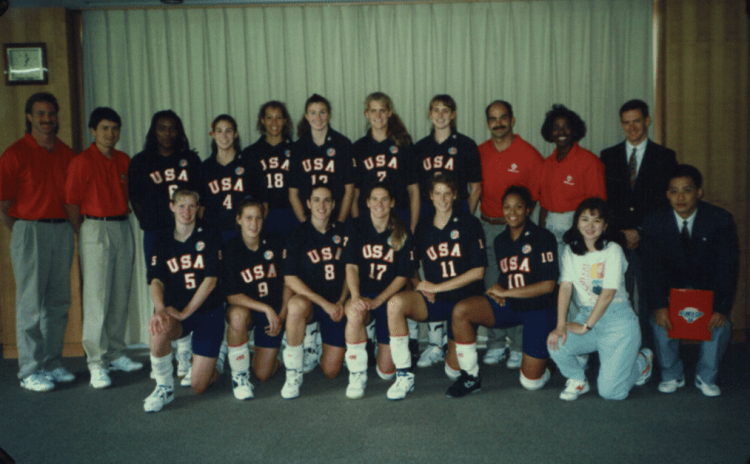
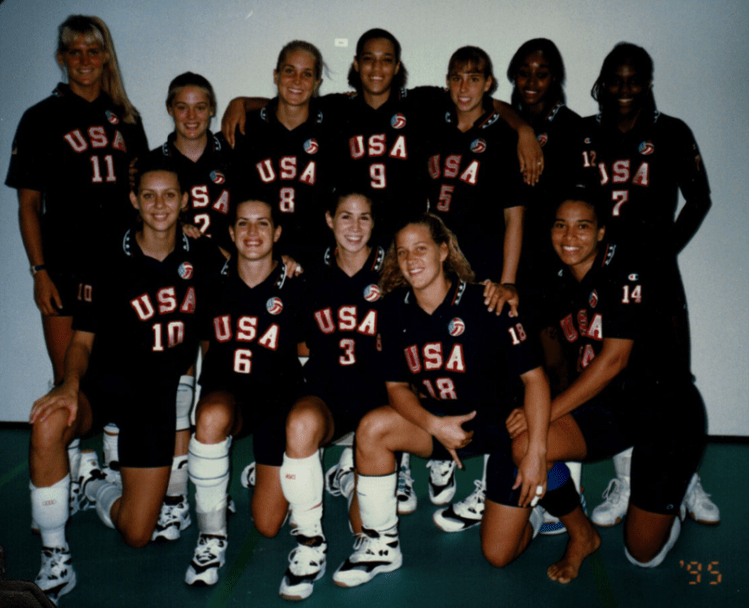
I graduated college in 1995 and 1995 was a weird year for National team stuff. While Terry Liskevych planned his national team retirement, all of us young hot shots got taken down a few notches when we realized it would also be the last Olympics for some of the greatest in the sport. There was absolutely not one person my age on that roster of legends. I’m talking Tara Cross-Battle, Lori Endicott, Caren Kemner, Bev Odeon, Elaina Odeon, Danielle Scott, Paula Weishoff and Elaine Youngs were not only amazing volleyball players, they were THE players I looked up to when I was in high school and college. Volunteering would be the closest I would get to that team.

Now, perhaps I should have volunteered at those ’96 Olympics just to surround myself with the greatness of those players and athletes. Perhaps I would have made some amazing memories and friends out of the experience. But life isn’t about regretting the past or playing “what if” all day, it’s about learning from the past and looking at all our decisions as part of a bigger picture.

After all, had I volunteered at those Olympics, I might not have had a chance to run into that coach who asked that question that inspired this post.

How bow dah?


Why do I tell this story (and any other story for that matter) Well, there a few reasons:

  1. It’s a good reminder to not pass up a lifetime opportunity because you are pouting. That’s just super dumb.
  2. Because even after 1996, I still didn’t play in the Olympics. Ultimately, in order to be at a level that high, you have to SELL OUT. You have to decide training/playing is more important than anything else. You have to just sell out. I did not have what it takes to play at that level and that’s okay. Not very many people do. In fact, of the twenty or so people in the pictures above only two of them went on to play in an actual Olympics – Charlene (Johnson) Tagaloa and Allison (Big Earl) Weston.
  3. Some days I need the reminder that when you set out for the biggest dreams and goals of you life, even if you don’t make them exactly the way you see them, you will still land somewhere outside the ballpark anyway. And if I need that reminder, chances are someone else does too.

So, to the guy who asked me why I was coaching that Ohio State camp, there’s your answer. Short and sweet. And for everyone else, keep dreaming and planning big.

You might not hit every big, crazy goal you set, but what if you do?


Priscilla Tallman is a freelance writer in Phoenix, AZ. She has an undergraduate degree in Psychology and graduate degree in Clinical Psychology. She has written for FloVolleyball, Volleyball Magazine, The Art of Coaching Volleyball, Sweat RX, Gorgo Fitness Magazine, CrossFit Fury, The CrossFit Games and OPEX Fitness. She is married with two children and in a former life played collegiate and professional volleyball. She currently coaches high school volleyball (indoor and beach) and continues to learn and grow in hopes of inspiring the next generation of amazing athletes.

9 THINGS YOU LEARN BEING A LIFETIME ATHLETE

Sports.

Life.

It’s all such a wonderful cycle. There are no guarantees as to how it will end and there’s certainly no easy path or template, but if you stay in the game, stick with your program and never give up on your goals, you will find fulfillment (and maybe even a spot on that podium).


9 THINGS YOU LEARN BEING A LIFETIME ATHLETE

The inner athlete never dies, it only evolves. The habits and patterns you develop today are the foundation for future goals. Be intentional about what you create and never stop learning.

Goals deferred, or important games lost, will sting. Sometimes that sting doesn’t go away, ever. You can reconcile it in your life and you can move on, but that sting teaches us our goals matter. It teaches us that not achieving something we’ve fought and trained for is an important part of learning and growing.

Best thing to take the edge off the sting is to get up and go again. You have to keep striving.

It’s important not to mistake your deferred dreams for someone else’s current dreams. We each have our own. Let others dream their dreams and keep yours in a safe place for you – even the ones that don’t happen.

The most epic things comes from the most basic people. Don’t let anyone convince you otherwise. Grandiose “epicness” is not sustainable. Don’t chase it.

Chase consistent work and good character instead.

Age is a number. It’s the number that tells you how many years you have played or trained. How many years you haven’t. How many years you took to figure things out once you stopped playing. How many years it took to get back in the gym after an injury. Though it’s a number, it’s not a prison sentence nor does it define you, so don’t treat it like one.

Whether you’ve won championships together or lost too many matches to count, your teammates are always your teammates. The result is not as important as what you did together during that season. The hours training, the hours traveling, the hours doing work when nobody else was doing work – that is where life happens. Some victories cannot be measured in points.

Winning at life doesn’t always show up on a scoreboard.

Belief in yourself only comes because someone else believed in you first and there are more of those people than you think.

You are only as strong as you are stable. In life. In sports. In relationships (also in your scapula).

When you show up and work every single day, hard work just becomes part of the equation. It’s easy math.


Priscilla Tallman is a freelance writer in Phoenix, AZ. She has an undergraduate degree in Psychology and graduate degree in Clinical Psychology. She has written for FloVolleyball, Volleyball Magazine, The Art of Coaching Volleyball, Sweat RX, Gorgo Fitness Magazine, CrossFit Fury and the CrossFit Games. She is married with two children and in a former life played collegiate and professional volleyball. She currently coaches high school volleyball (indoor and beach) and continues to learn and grow in hopes of inspiring the next generation of amazing athletes.

Sorry, Kid…

Sorry, Kid…

I’m not going to carry your baseball bag. It’s your equipment, your sport, your bag. You carry it.

Sorry, Kid…

I’m not going to tell you you’re the best player on the team if you have a bad attitude and you don’t work hard at getting better. Getting better takes hard work and if you don’t want to work hard (and it’s okay if you don’t), then you won’t get any better.

Sorry, Kid…

Someone else’s hard work is harder than yours. That might always be the case. Only way to find out is to work smarter and harder and longer than every one else while simultaneously not worrying about anyone else’s work but your own.

Sorry, Kid…

That’s not ESPN video taping your practice and nobody wants to interview you after.

Sorry, Kid…

These are the rules and if you don’t follow the rules in this sport, there are consequences on and off the field.


Sorry, Kid…

Losing stinks. I’ve lost more than my share of games. It’s a terrible feeling, but with every loss we have the opportunity to learn something and get better and I’m not going anywhere. I’m here no matter what – I’m in this with you.

Sorry, Kid…

Not being the fastest kid on the field is hard. Going up a level and not being the best is hard after being the best at the last level, but trust the process – when you listen, take feedback and get after it when no one is watching, you will get better. You may not ever be the fastest kid, but if you keep pushing, you will be in the game longer and out last many who throw in the towel before you.

Sorry, Kid…

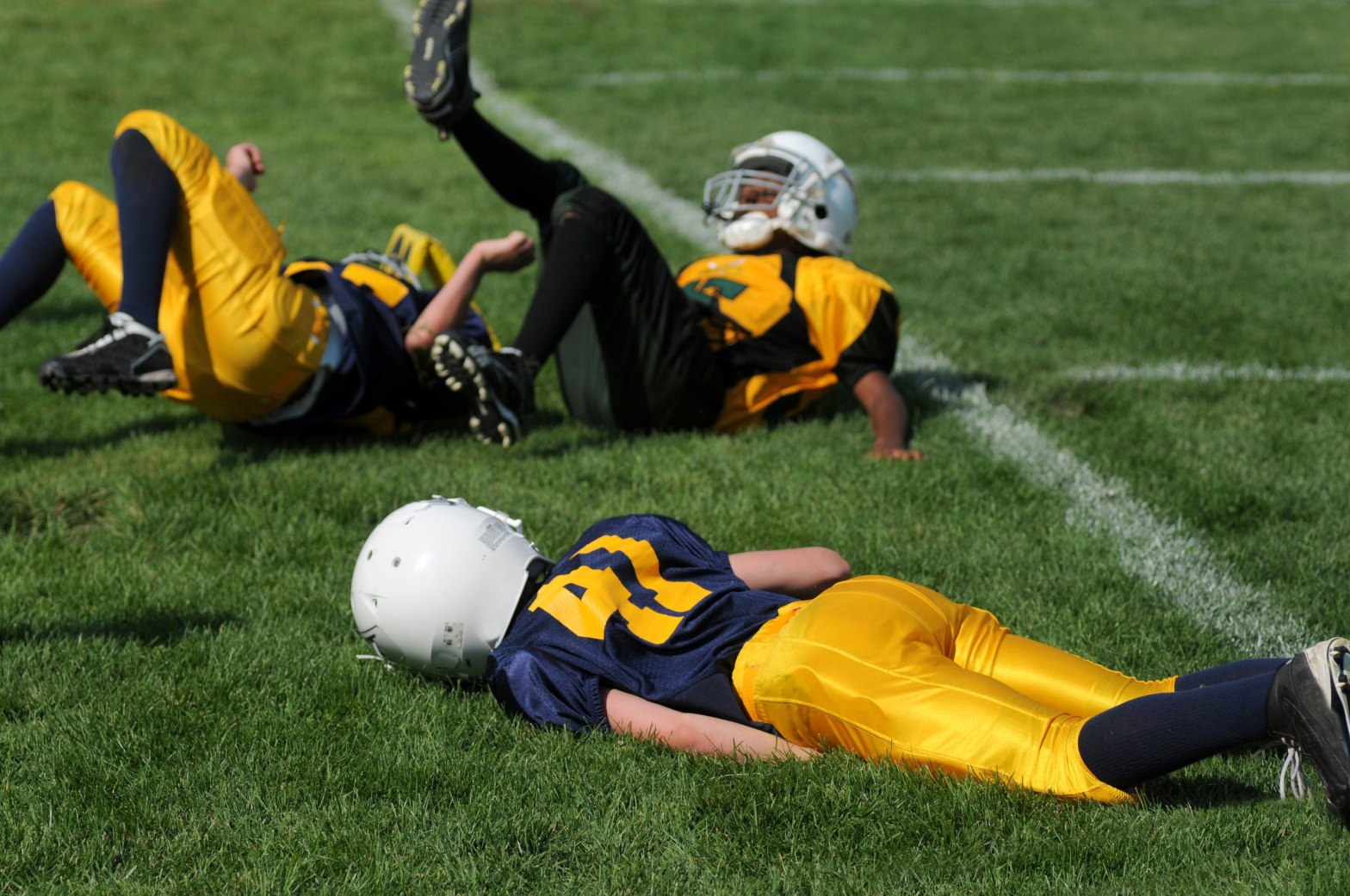
Being on the bench is hard. Wanting to play and knowing you can play is hard when the lineup paper gets signed by the coach, not you. But you are still on the team and, therefore are still a contributor. Contribute in whatever way you can. Whether that’s to make the starter’s better or to encourage them from the sidelines, you do your part. Don’t ever stop doing your part.

Sorry, Kid…

Hard work is, well, hard. I wish I could tell you it was easy or that all the breaks go your way, but I can’t. Life stings sometimes, but it’s also quite amazing sometimes. We have to take our knocks, get back up and go again and every effort looks different than the last one, so just keep getting back up.

Sorry, Kid…

You are stuck with me. I know you think others have given up on you, but I haven’t. You can’t get rid of me. I may be silent and I may not say much to you after a game or after a tough loss or break, but I’m still here. When you are ready, I will be here to listen or talk to cry or whatever, you will always have me for that.

Being a parent of a kid in youth sports is about choosing your opportunities to teach and choosing your opportunities to connect and bond. The moment is today, right now – not ten years down the road. My kids like to dream and they like to imagine themselves on the big stage, but my actions and my words as a parent are vital to their character, like, right now. I just keep telling myself when I show up, I need to be there for them today. Not their future self (though lessons will help guide that), but who they are today. The stakes seem to get higher as they get older, but they don’t have to. Keep it simple and remember these are the same kids who colored on your dresser with crayon.


Priscilla Tallman is a freelance writer in Phoenix, AZ. She has an undergraduate degree in Psychology and graduate degree in Clinical Psychology. She has written for FloVolleyball, Volleyball Magazine, The Art of Coaching Volleyball, Sweat RX, Gorgo Fitness Magazine, CrossFit Fury and the CrossFit Games. She is married with two children and in a former life played collegiate and professional volleyball. She currently coaches high school volleyball (indoor and beach) and hopes to pass on her love for the sport to the next generation of amazing athletes and leaders.


Staying Connected to Alumni Groups and Sports Programs After Graduation

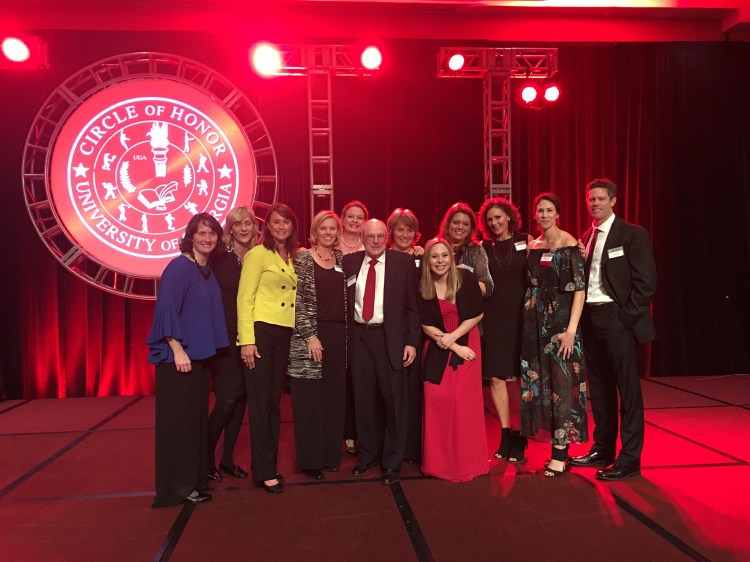
This photo represents over 30 years of Georgia volleyball from the inaugural coach of the program, Sid Feldman to the current head coach, Tom Black. My very own assistant was honored for her achievement as a bulldog player, coach and her life beyond Georgia.
This photo represents over 30 years of Georgia volleyball from the inaugural coach of the program, Sid Feldman, to the current head coach, Tom Black. My coach, Jenny McDowell, was honored for her achievement as a bulldog student-athlete, coach and the impact she has had in her career beyond Georgia Volleyball.

Over the past five years or so, I’ve seen more live football games than I saw in my four years of college.

You might think that’s weird for someone who went to school in the SEC (a hotbed for college football) but, alas, I was a collegiate athlete. A collegiate athlete who shared the same Fall season as the South’s beloved college football and when we weren’t travelling or practicing or lifting or being tired and actually had a two-hour block on a Saturday to enjoy the games like all the regular students did…we just figured we’d watch it from home and re-hash the game with our friends.

Our friends were the ones on the field.

Kids just like us trying to figure it all out while carrying a full load of classes and training for our sport.

But college sports is much more than football. The University of Georgia alone has nineteen varsity sports teams comprised of anywhere from 20 to over 100 athletes per team and while we are full-time college students who enjoy being on a college campus and having a college experience, we are also in a microcosm that includes early registration, tutors, academic services, sports psychology counseling, food per diem, state of the art training facilities, sport specific athletic gear and nutrition plans to name a few – very few.

As wonderful as it all sounds (and it is most days), there comes a time when graduation nears and real life begins to set in.

I still remember the fresh sting of my first off-season after my playing career was over. I didn’t need to be at practice. I didn’t need to be in the weight room. I just had to be at class – down time is truly the enemy of a driven student-athlete if you don’t know how to manage it.

After all my sweat, tears, blood, road trips, laughing until it hurt, powerful moments with teammates and coaches, wins and losses, it was time to move on – that was a hard pill to swallow. But I’m probably the only one who has ever felt that way (said no student-athlete ever).

Current student-athletes on Georgia's LEAD team represent a select group of student-athletes looking to develop and advance leadership qualities in sport and academics.
Current student-athletes on Georgia’s L.E.A.D team represent a select group of student-athletes looking to develop and advance leadership qualities in sport and academics.

It’s why as alumni, our stories can be a valuable resource to those outgoing seniors staring that great wide world right in the face and being excited and scared all at the same time.

So, what can you do? Here are a few ways to leverage your influence for current student-athletes and outgoing seniors:

Share your story – whether online through social media or in your group of influence, share your experience. Maybe you transitioned easier than some maybe you didn’t, share that. Talk about what worked for you and what didn’t. Talk about where you struggled most to find fulfilling work. Talk about those jobs you took just to pay the bills. Talk about whether or not your degree has helped you or if you found work outside your field of study.

Go back for you Alumni weekend – My joke has been that I flew half way across the country for a t-shirt and a free pom-pom, but what I’ve learned in recent years is my effort to connect and go back is bigger than what I GET from the experience; it’s about what I can GIVE back by going. Don’t just go back and sit in the stands and leave. Have conversations, connect with the team and/or coach if you can. They won’t fully understand your presence right now, but having alum in the stands means you are a program worth coming back for, not based solely on wins, but based on a shared experience.

Meet with athletes – When possible (and within compliance), meet with current athletes. Ask them questions. Listen. What are their goals outside of sports? How is school? Remember, they are in that same microcosm you were in and though they may have many friends outside of it, nobody will quite understand it like former student-athletes do.

Follow on Social – Just by following your groups and teams on social media you will create a connection with former, current and future student-athletes. You can see how your team is doing, who the new recruits are, what the coaching philosophy is, where the program is now as opposed to how it was when you played and so much more.

I’ve connected and reconnected with so many people through social media groups and individual athletes for my sport and have loved seeing the program and players progress.

Shared Experiences Connect People – Because we have been where they have been, we can be honest about our experience. Our biggest asset to them is the fact that we’ve already been there. We know it takes work, we know no one is going to give us a job we didn’t earn or aren’t qualified for and we know that no matter how connected we are, we still had to work for our careers. The good news is we have our athletic background and experience that mirrors this process one for one. Work hard, learn from your mistakes and keep moving.

We all have lives after sports – and thank goodness we do, but if there is a chance to share truth to those who are just emerging into that reality, let’s do that. It’s a full circle that’s worth replicating again and again.


graduating-seniorPriscilla Tallman is a freelance writer in Phoenix, AZ. She has an undergraduate degree in Psychology and graduate degree in Clinical Psychology. She has written for FloVolleyball, Volleyball Magazine, The Art of Coaching Volleyball, Sweat RX, Gorgo Fitness Magazine, CrossFit Fury and the CrossFit Games. She is married with two children and in a former life played collegiate and professional volleyball. She currently coaches high school volleyball and hopes to pass on her love for the sport to the next generation of amazing athletes and leaders.

Through Tunnels and Over Mountains

0ill1qgxz64-jaromir-kavan

There’s this stretch of mountainside road, a tunnel actually, that connects Switzerland and Italy.

It’s the Great St. Bernard Tunnel (I know! How cute is that name?) and goes through the Swiss Alps and pops you out on the Italian side. Two lanes, one in each direction, with a very sketchy guard rail on one side that approaches the tunnel and solid mountain on the other.

I was living in Geneva, Switzerland playing volleyball and every now and again, we would get a couple of days off. Being twenty-something and wanting to explore the world, I used that time to do just that – explore. Depending on how much time we had, it could be Paris by train for an overnight, Annecy for a day trip and groceries, Lucerne or Lausanne to visit other Americans in Switzerland playing or Milan for shopping and all the pizza.

The drive to Milan was maybe four hours from Geneva by car, but you had to go through the Great St. Bernard Tunnel to get there. My Mazda 121 was fine for city driving, but whenever it snowed, this Texas girl white knuckled that steering wheel and hoped and prayed my little car would deliver me and my passengers safely wherever I was going.

Driving on a slick road, through a tunnel with Alp on one side and bottom of Alp on the other side was no easy feat for this out-of-towner.

But, we made it – there and back – twice (in the snow and slush) and Milan is beautiful.


“For most of its 5,798-metre (6,341 yd) length the tunnel runs in a straight line, but incorporating a gentle slope. The northern end is 1,918 m (6,293 ft) above sea level while the southern end is only 1,875 m (6,152 ft) above sea level. At both ends, the approach road to the tunnel is covered by a gallery / avalanche shelter in order to minimize the risk of access to the tunnel being temporarily blocked during bad weather.” – Wikipedia.com

Life can seem a lot like that journey through the Alps some days. It might be a personal crisis, a loss, a sudden illness or a season of growth that can put us on that narrow path in life turning a simple ten minute drive through the tunnel into a storehouse of broken down cars and frayed nerves; and while our desired destination might be a beautiful sight to see, the tunnel can often feel lonely, scary and with no end in sight.

But that’s the thing, if we are going to arrive safely to our destination, we need to keep our eyes on the road. We have to put one foot in front of the other or white knuckle the steering wheel and trust our destination is just outside those tunnel walls. Once you have been through enough tunnels, you start to realize when you keep moving, you always come out the other side.

Getting stuck somewhere in the middle or clinging to the sketchy guard rail upon approach might feel safe for the moment, but intuitively most of us know this – the only way out is through.

Great St. Bernard Tunnel, Switzerland

I love this verse, Matthew 7:13, 14.

““Enter through the narrow gate. For wide is the gate and broad is the road that leads to destruction, and many enter through it. 14 But small is the gate and narrow the road that leads to life, and only a few find it.

I spent a lot of years on the wide path and it’s full of people, fun, adventure and excitement. But when I decided to travel the narrow path almost twenty years ago, it required me to make some changes and one of those changes was realizing when you choose the narrow path, there are fewer and fewer travelers on that road with you. Fewer people willing to make sacrifices for growth or to exercise self-control in order to build character.

The path might be narrow and the travelers few and far between, but this path is filled with life. Like good, rich, meaningful life – and just because there aren’t as many people along for the ride, does not mean it is lonely.

Yeah, some days I find myself white-knuckling the steering wheel and clinging to the guard rail – but I know if I can hang on, the tunnel opens up and the destination I’ve been moving toward is finally before me.


supermomPriscilla Tallman is a freelance writer in Phoenix, AZ. She has an undergraduate degree in Psychology and graduate degree in Clinical Psychology. She has written for FloVolleyball, Volleyball Magazine, The Art of Coaching Volleyball, Sweat RX, Gorgo Fitness Magazine, CrossFit Fury and the CrossFit Games. She is married with two children and in a former life played collegiate and professional volleyball. She once lived in Geneva, Switzerland where she ate too much bread and chocolate, wasted her money of watches and clocks and wore really bad clothes. She currently coaches high school volleyball and hopes to pass on her love for the sport to the next generation of amazing athletes.