The Conflict of Quitting and Why It’s Necessary

photo-1457969414820-5fdd86fc0b84

This past year, I was honored to be a contributor in a book for student-athletes, helping them transition into the work force after graduation. The book, “Post Moves,” by Angela Lewis was compiled from interviews with 15 former athletes who had successfully transitioned from their playing days into careers in various fields. Angela is also the host and producer of “Athletes as Educators,” and has interviewed many inspirational athletes and leaders who have successfully transitioned from sports into the work force.

In our time together, we spoke of how I found employment after graduation by using a temp agency.

“When you’re in college, the network you have really is kind of given to you. You have a network of people that are ready to help you succeed. When you graduate, that process is up to you. You have to figure out your own network. I had a hard time doing that, so I think getting into a temp agency was really helpful for me and my personality because that was my network,” excerpt from “Post Moves”

I have many success stories of what does work and the great people and jobs I took as a result of working with a staffing agency, but for every success story, I have a handful of failed attempts and hurdles that needed to be jumped to find a good fit.


Newport Beach, CA. Fashion Island. The idyllic setting for a short-term temp assignment – ocean views and just minutes from my apartment. Nice idea, although, that is not exactly how this all goes down.

My assignment was to teach a new software program to a group of attorneys. Easy peasy.

A few pieces of clarifying information here: I was given a program manual (just a program manual), a yellow legal pad for notes and a couple of pencils. I wasn’t given the actual software program to work with nor did I have a computer on which to practice.

I arrived for work, introduced myself to the two attorneys and got ready to do my job. They directed me to my workspace for the day, a windowless closet-office about 6′ by 8′ with a shelf as a desk and one of those rolling wheely chairs. They asked me to keep the door closed so I wouldn’t have any distractions.

After about two hours of trying to decipher the manual (and not seeing or hearing another human being), I peeked my head out in search of life.

Nothing.

There was another door leading into the hallway where there was a water fountain and bathroom, so I opened that door to go get a drink of water. When that door cracked, both attorneys appeared out of their offices and looked at me puzzled.

“Where are you going?” one asked.

“Are you already finished?” the other one questioned.

“No, I’m not finished, I was just going to get a drink of water. I’ll be right back.” I said.

My wheels were already turning and I was getting a really strange vibe off these people. I was only two hours in so I thought I would just make it to lunch and see where I was at that time. I sat in the closet-office for about another hour, mostly laughing to myself about how I thought I may have been on some hidden camera show, this whole situation was just too weird.

Okay, back to it. Read the manual, teach the people. Now, I know there are people out there who can do this, but I wasn’t one of them. Three lessons here:

  1. Know your strengths. Know your weaknesses.
  2. Know whether or not you are the right person for a task.
  3. Know when to quit.

I still hadn’t seen another person since I tried to hydrate myself at the water fountain, but again I emerged from my 6 x 8 closet-office in search of life and a much needed lunch/mental break (I was in my early 20’s, this was mentally taxing). This time I had to knock on one of the doors to summon life.

“Hi, I just wanted to let you know I’m going to go on my lunch now,” I said to the attorney who never looked up from his computer while I was speaking.

“Oh,” he said “You had your fifteen minute break, I didn’t think you needed a lunch break,” he continued, still looking down.

“Okay, I’m just going to make one phone call,” I said (the irony was thick).

I called my recruiter and in hushed tones explained my current situation, she was apologetic and told me to take a lunch break and she would take care of it. I told her thank you, got in my car and left the two attorneys to themselves for the rest of the day. I never went back. For all I know, they are still there, heads in their laptops unaware of any temp they may or may not have hired to teach them a software program.


“As athletes, we do the thing that is in front of us. I think that is one of our best assets. We say, okay, I don’t know the long-term of this, but I do know what’s right here, so I’ve got that figured out,” excerpt from “Post Moves.”

For a former athlete, quitting an assignment (no matter how ridiculous)  created conflict in me. Most of us will do whatever it takes to finish a task or an assignment, we have made our success by executing the plans and programs of others and although we may be mouthy or protest a bit, at the end of the day we are very good at following directions. We understand how daily, intentional work creates big pictures and we don’t quit easily.

But some projects are not ours to complete, finish or crush. If it’s not a strength or a weakness to figure out, if its just noise on the edge of your dream or passion, you need to quickly decide, scrap it and move on.

Hear this: not every environment or challenge is a competition, sometimes it’s just a test.

Not every single thing is worth your time, the wisdom and the meat of your life is in learning how to choose what is. After all these years, all I can think of today, is that had Snapchat been around in those days I would have slayed that story on social.


kimjphotography3Priscilla Tallman is a freelance writer in Phoenix, AZ. She has an undergraduate degree in Psychology and graduate degree in Clinical Psychology. She has written for FloVolleyball, Volleyball Magazine, The Art of Coaching Volleyball, Sweat RX, Gorgo Fitness Magazine, CrossFit Fury and the CrossFit Games. She is married with two children and in a former life played collegiate and professional volleyball. She is featured in the book “Post Moves” – The Female Athlete’s Guide to DOMINATE Life After College by Angela Lewis. She eventually realized that sitting in small closet-offices and cubicles was much less fulfilling than doing the things she really loved, parenting her kids, writing about sports and coaching student-athletes to be fulfilled on and off the court.
Why Lifelong Deliberate Practice Matters

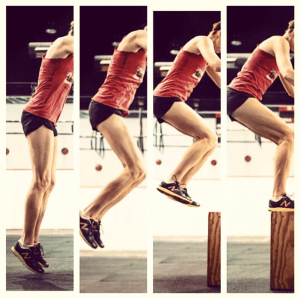
Photo Cred: Adam Bow, cheesy progression app cres: me
Photo Cred: Adam Bow

Is there any one thing you practice every day?

Not a discipline, like morning quiet time or meditation or even exercise, but something you go out of your way to practice? Something you deliberately set time to work on in order to get better at? Your golf swing, calculus, memorizing data, learning a musical instrument or voice practice?

I’m reading a book called “Peak: Secrets From the New Science of Expertise” written by Anders Ericsson and Robert Pool. It examines the science of purposeful or deliberate practice – I also happen to be practicing something right now. I’ve practiced something every day of my life for as long as I can remember (writing is one of my more consistent practices), but for the past six months, I’ve been practicing jumping. Actually, I’ve been relearning how to jump and land properly.

You might be thinking “but you played volleyball for years, isn’t jumping something you just do? Why do you need to relearn something you already know how to do?”

Good questions. I’ve asked them myself on particularly frustrating days.

Why am I practicing this? Why does it matter? Isn’t it too late to be figuring this stuff out? Let’s get the obvious stuff out of the way, no it’s not too late, yes, it matters and also, when the zombies come, I’ll be able to get over all those fences that seem to be in the way during my important chase scene.

But most importantly, in recent years, I couldn’t jump or land without pain and I wanted that to change.


“If you practice something enough, your brain will repurpose neurons to help with the task even if they already have another job to do,” Ericsson and Pool.

So, in June, I hired a professional fitness coach. I wanted to test my physical capabilities under the direction of deliberate coaching and also, I wanted to do things (like jump) without pain. I wasn’t just looking for reps on reps kind of practice, but, deliberate, intentional practice. So, for the past six months I’ve been rebuilding things – slowly, deliberately, intentionally. It’s not all roses. I’ve also resisted, become frustrated with my progress, envied other people lifting barbells while I try not to snap myself with an arsenal of assorted exercise bands. I had to practice seemingly unrelated things to get where I wanted to go and I didn’t get to jump right away.

Yah. I know, right?

It went a little something like this:

  • single-leg band work
  • goblet squats
  • single-leg band work
  • single-leg band work
  • single-leg reverse deadlifts with a band
  • deadlifts
  • single-leg band work (developing theme)
  • single-leg jumping and landing
  • jumping and landing with two feet

Abridged, but you get the idea.

The good news for me is that I’m jumping – with less pain and with more frequency than I was six months ago. The other good news is that with daily, deliberate practice I’m developing new (and also cashing in on some old) brainy mental stuff too, like, mental strategies and patterns that keep me motivated and interested.

In short, my jumping practice doesn’t just benefit my jumping, it benefits me in other areas of my life too.

“Even when the skill is being practiced is primarily physical, a major factor is the development of the proper mental representation,” Ericsson, Pool.

Practicing something that is physical in nature not only offers physical benefits and satisfies my need to get airborne, it also stimulates the areas in my brain that help develop mental strategies (Ericsson and Pool call these “mental representations” or maps). As I get better at the task I’m practicing, I gain confidence with that skill, but I also gain confidence to try more things outside of those parameters.

Which means I learn to jump, but I’m willing to learn other things too.

Like, say, dance.


“The key change that occurs in our adaptable brains in response to deliberate practice is the development of better mental representations, which in turn open up new possibilities for improved performance,” Ericsson and Pool.

I’m not a dancer. (I know, shocking).

Recently, however, I danced (okay, memorized steps) a small part in our local production of the Nutcracker, with my husband and children. I learned the steps in just over a week of rehearsals and although it took a few days for my brain to connect what I was seeing to what my feet were supposed to do, once I figured out how to break it down into little segments it started coming together.

The music, the choreographer’s counting, following my husband’s lead and watching the more seasoned dancers around me all played a role in developing a mental plan to execute my part of the dance. As the steps became second nature, I tried to add emotion that matched the story and had to figure out what to do with my anxiety about doing all of this in front of an auditorium full of people, many of whom I knew personally.

“As you push yourself to do something new – to develop a new skill or sharpen an old one – you are also expanding and sharpening your mental representations, which will in turn make it possible for you to do more than you could before,” Ericsson and Pool.

Bingo.

Which leads me back to why learning how to jump (or how to do anything) is so important.

Jumping leads to dancing leads to expanding and sharpening mental representations leads to taking on challenges of all kinds, physical or otherwise. So, with deliberate, intentional practice of some skill, you become more adaptable and that leads to doing and trying new things. And I have good news, we all qualify for that.

You may not want to practice jumping or dancing, but how about a foreign language, memorizing strings of numbers or famous quotes or scripture or practicing an instrument or playing chess?

That new year’s resolution coming up? Yeah, don’t do that. Find something you enjoy and want to get good at, find someone to coach or teach you and give you feedback and start practicing – every day, with deliberation. Yeah? I mean, honestly what have you got to lose?


setback happen. take a good look, dust yourself off and get back in the game.Priscilla Tallman is a freelance writer in Phoenix, AZ. She holds her Crossfit L1 Trainer Certification as well as the CrossFit Mobility Certification and an undergraduate and graduate degree in Clinical Psychology. She has written for FloVolleyball, Volleyball Magazine, The Art of Coaching Volleyball, Sweat RX, Gorgo Fitness Magazine, CrossFit Fury and the CrossFit Games. She is married with two children and in a former life played collegiate and professional volleyball. This blog is a collection of her own opinions, stories and process and do not reflect that of the sites or magazines for which she writes. Even though she was once called “The Spikedoctor” during her playing career, she is definitely not a doctor of any kind.
A Lesson In Chill From One of the Greats – Zeke Bratkowski

packers-zeke-bratkowski-signed-8x10-photo-3
photo credit: ca.picclick.com

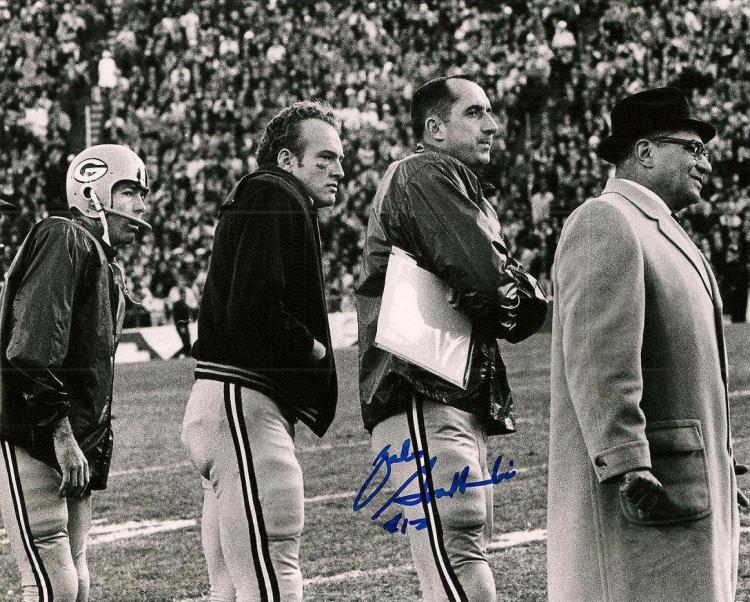
In 2006, I met Zeke Bratkowski.

Bratkowski, who played for The University of Georgia in the early 1950’s, was a standout quarterback for the university who went on to play professionally for the Chicago Bears, Los Angeles Rams and Green Bay Packers. He also served two years in the U.S. Air Force (while he was still with the Bears) and had a full coaching career in the NFL that spanned thirty years and six teams. He’s got a football pedigree that every kid (and his dad) who throws the pig skin around after Thanksgiving dinner would be envious over.

But, that’s the thing – of all the things I remember about meeting Zeke, being prideful wasn’t one of them.

Don’t get me wrong, he had lots of old football stories – the kind you have from playing with a brotherhood of teammates for many years – and he didn’t not talk about his accomplishments, but he had a stillness about him that communicated “yeah, I’ve seen some things.”

In a word, Zeke had chill.


Our paths crossed as part of an induction ceremony for the University of Georgia’s Circle of Honor. Since Georgia doesn’t have a Hall of Fame, nor do they retire player jerseys, the Circle of Honor represents this kind of milestone and gives former athletes a chance to be recognized for their accomplishments and contributions to the university through athletics and beyond. I was being inducted in 2006 along with Heather Stepp McCormick (gymnastics), George Bezecny (tennis), Dick Copas (golf) and Zeke Bratkowski (football).

As part of the weekend, we were introduced on the field during half-time of that weekend’s football game and then we had the option to sit together for the remainder of the game. My husband and I stayed for the game and sat right next to Zeke and his wife. They were kind, generous people who drank Sprite after Sprite after Sprite (or was it Diet Coke?).

In typical UGA football fashion, the Bulldogs handed us hope early in the first quarter, but then squandered their lead putting us on pins and needles for the next three quarters. My husband and I (along with Zeke’s wife) got worked up over the Dawgs, but Zeke never said a word. He sat through the game as cool as a cucumber, while everyone else around us was going bananas.

He watched.

He shifted in his seat.

He asked for more Sprite.

Now and again, he would mutter something that I couldn’t hear.

Not one bead of sweat.

Not one clap of the hands.

Not one swear word.

Just watching.

Chill.

Finally, our beloved Bulldogs pulled off a win. The crowd went crazy – as Dawg fans do.

I watched Zeke.

He let out slight exclamation of cheer, gathered his empty soda cups and he and his wife were gone.


That story will always stick with me. Why? Because I have zero chill. I was one of those intense players who got worked up over all kinds of stuff. I am still one of those people who wears most of my emotion on my sleeve – the good stuff and the not so good stuff. I am one of those coaches who wants to tell each kid how awesome they are all the time because I think they need to hear it.

But what I learned from Zeke is that chill can also speak loudly.

I don’t know, maybe it’s because he played and coached at such a high level that nothing much ruffles his feathers anymore or maybe it’s just his personality to be still, but something about that experience made an impression on me (and my husband – we still talk about that game).

I might not ever have chill like Zeke, but I will always respect and admire those who do.

WE’RE FINE! (no, seriously) WE’RE FINE!

There’s a phenomenon in volleyball these days. The genesis is unknown, but if you watch any high school, club or college match you will hear one common thing said over and over again – “we’re fine.” It’s unclear when it changed from older versions of self-soothing, like, “my bad” or the rather demanding, albeit whiny, motivators of yore “let’s gooo!!” or “come on you guuuuys!” but having listened to team after team speak the words “we’re fine,” one can only assume it going to be here a while. Here are just a few samples of when a player might use the term:

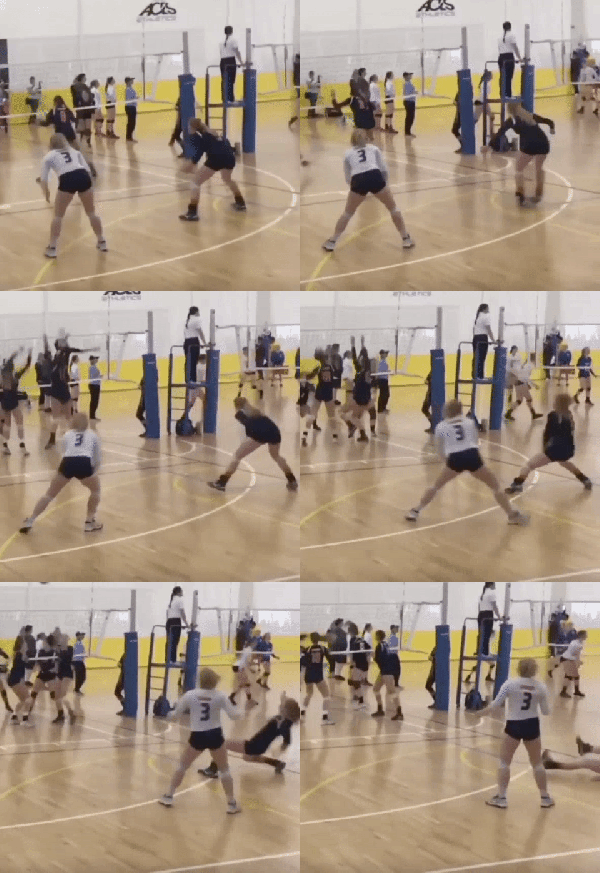
“Blocked every ball straight down…also netted every single time, but, WE’RE FINE. ”

giphy-6

“I just hammered a ball on the ten foot line (from my side and under the net) but I’M FINE, WE’RE FINE!”

giphy-1

“I just hit a ball so hard angle on my side that it travelled parallel across the bottom of the tape for at least five seconds, but, WE’RE FINE.”

giphy-9
“My coach told me to serve to area five, but I got an ace by serving area three instead, so WE’RE TOTALLY FINE.”

giphy-4
“The score is 8-22 in the third, we are down fourteen points and lost the first two sets, but, seriously, WE’RE FINE…no really, WE’RE TOTALLY FINE. LET’S KEEP SAYING IT TO EACH OTHER, OKAY?”

giphy-5
“You, you, you! No! Me, me, me. No, YOU! WE’RE FINE.”

giphy-1

“Totally got six packed by my own hit after it was blocked, don’t worry, I’M FINE…WE’RE FINE.”

giphy-7
“Up 23-8 but the other team just made a huge point run off our errors making it 23-22, but seriously guys…WE’RE FINE! One pass, WE’RE FINE!”

giphy-8

“Been tooled fifteen times by the same hitter and I haven’t fixed my blocking, but I’m fine. WE’RE FINE. EVERYONE’S FINE! (Especially that hitter, that hitter is TOTALLY FINE).”

giphy-3

I don’t know, it’s probably just me, but it seems as though whenever someone says “we’re fine” that they are not even remotely fine, but it’s all good, right? WE’RE FINE, right? Happy passing, setting, hitting, blocking and serving my friends! I love you all and this crazy sport and wouldn’t change a thing.

From Player to Coach: Understanding My Coaching Philosophy

13346198_1734197430135498_4087148626990503065_o
Me dabbling in the coaching pool. This is when I knew it was time to get back into the game and surround myself with the people of my sport. Photo cred: Adam Bow @rxdarkroom

CHAPTER 1

Mrs. Cockshutt was my first ever coach, well, she was actually my P.E. teacher. I was eight years old in the 4th grade and was beginning my year at a new school. Having skipped 3rd grade, I was a year and a half (if not two full years) younger than everyone else in my class which meant I was also smaller and weaker than most kids.

Mrs. Cockshutt didn’t care, in her P.E. class, we were all the same. Our school was an old sorority house, so we had this massive house/school with a massive back yard – complete with a tennis court and ample running and exploring space. Some days, P.E. meant running around playing tag and other days were more structured. One day in particular, we played a new game called volleyball tennis.

Volleyball tennis is exactly how it sounds. One tennis net, one volleyball, one contact per side with one bounce before sending it back over the net to the other side. I immediately loved it and when it was time to do our end of the year report for P.E., I scoured every Encyclopedia Britannica with the letter “V” on the spine to do my research.

In 5th grade, we changed schools. Lucky for me, my new school had a volleyball program and the new coach was sure to be just as wonderful as Mrs. Cockshutt. Al Bennett was my home room teacher and volleyball coach and one of the three main drivers behind Austin Junior Volleyball, which would become what is now one of the premier volleyball clubs in the nation, and one of the best in Texas. Austin Juniors has gone on to produce more Division I collegiate All-Americans (I’m one of them) than you can shake a coaches clip board at. To say I got lucky getting to be part of the inaugural class of club players in Austin would be an understatement.

I hit volleyball gold.


CHAPTER 2

In 1985, however, club volleyball was very new and I was still very small. I was still a year-and-a-half younger than most kids in my class and my team was comprised of various grade levels, so while everyone was starting to get muscles (and boobs and periods), I was still wearing a baggy size XS and trying to squeeze nutrition out of a steady diet of grilled cheese sandwiches and macaroni. Not only was my body 9 years-old, my maturity level and emotional development were also the same age – but I was adaptable.

A scrappy, skinny thing, I had desire enough to reach the moon, but I lacked talent, size and let’s call a spade a spade – I wasn’t athletic – at all. Still, my school and club coaches were hard on me. But they wanted me to be better, right? So, I put up with it as did my parents.

I didn’t get better right away. I didn’t get better for a long time. After about five years of club and school volleyball (in which I spent a great deal of time on the bench), I had taken in a lot of really tough coaching. I had taken in toxic words about my ability, harsh criticism of my attitude, eye rolls, loud sighs, all the yelling and sideline body language that would shame Brene Brown into a corner to process. It wasn’t all bad though, I had a lot of fun with my teammates and there were glimpses of hope when I got put in to serve every now and again.

By the time I was a sophomore in high school, I had enough talent to hold my own and had settled into what I thought was normal coaching. I had no idea that anyone did anything different except yell and throw tantrums on the sideline or shame and criticize in post game talks. That was just what I knew and over time, it was actually effective for me. I used shame to motivate me to perform better. I used eye rolls to put in hours and hours of reps on my own time. As a player, I’d become somewhat desensitized – not immune – to it all.

But the thing about being coached by people who chip away at your confidence is that when it’s your turn to coach, you don’t know what else to do except have the same high standards and expectations for every player regardless of size, ability, desire, etc. You tend to coach the way you’ve been coached. That’s exactly what I did after I finished playing.

I only coached club volleyball for one season before quitting. See, I had a 16-3’s team, which meant I had kids all over the spectrum. Some were serious, some were just there to have fun, some were there because their parents made them play – for someone with high standards and unrealistic expectations, this was a nightmare. I did the only thing I knew how to do – yell, roll my eyes, make them run, communicate disappointment with my body language and who even knows what else.

Intuitively, I knew coaching wasn’t for me and I also knew, those girls didn’t need what I had to offer.


CONCLUSION

The last time I coached a team was in the 1900’s – 1998 to be exact.

Firmly planted in the 21st century, 2016 to be exact, I finally felt it was the right time to see if I could actually be a good coach. I’ve been “coaching” through writing and speaking and encouraging parents. In fact, my undergraduate and graduate degrees in Clinical Psychology were actually for the sole purpose of counseling athletes through transitions (and perhaps bad coaching), but it was time to get back in the gym and back around the kids.

Here’s what I can tell you from where I sit. I have absolutely no grudges or ill-feelings for any of my coaches. I am extremely grateful for the way my life through sports has given me a wealth of experiences and I’m completely aware that had I not been lucky enough to play for some of the best coaches in Texas (they are still producing champions), my story might look much different.

However, as coach, I couldn’t imagine speaking to one of the athletes on my team in the manner by which I was spoken, I can’t imagine telling one of them “you suck” or making jokes within ear shot of them about their ethnicity. My responsibility to these girls (and to my family) is to challenge them and encourage them. My job is to communicate their potential and ability and see them as individuals, each on their own path – AND to take all of that and help them work together for a common goal.

I have been overwhelmed most of this season that God has given me a second chance to impact someone’s life. Sometimes I sit in my car after a game and cry thinking how lucky I am and think about my little nine year-old self who had a heck of a dream to become a volleyball player someday.  It’s been a wonderfully hard journey and I wouldn’t take even one second back.


AFTERWORD

I’ve hesitated writing this because I truly, truly do have utmost respect for all my coaches and I know who they are as people now and know they continue to impact our sport in great ways. Most of what I speak of here is from my formative years between the ages of 9 – 14. Once I was old enough to talk back, I did – and I learned how to take care of myself in most cases. My high school and college coaches were a walk in the park mostly because I had already learned how to take a lot as an athlete.

I am forever grateful for that. I really, really am.

I wrote this mostly because I think it’s important to talk openly about it. If you don’t know why you are doing what you are doing as a coach or what impact it may have in kids life (especially formative years), take a step back and examine it. I never wanted any kid to feel what I felt like after a lashing and when I found myself doing just that, I had to stop. We are the adults and we need to know our limits. I needed to find my limit and I needed time to figure out who I wanted to be as a coach. I think I know now.

Sincerely,

Coach T.

Confessions of a Lifetime Athlete

photo-1434719079929-f61498a4828e

So, I was going to say former athlete, but if you are anything like me, you know that once you are an athlete you’re always an athlete. Physical limitations and injuries may sideline us for a bit, but eventually we make our way back onto the field. It isn’t a perfect science (and I wish some of these weren’t true or necessary), but embracing them is much easier than resisting them at this point, and that’s good for everyone.

I wonder if you can relate to any of these confessions too?

  1. I STILL HAVE COACHES: I humbly admit: I need direction. I don’t necessarily need someone to yell at me anymore but having a training program or fitness class helps me stay on track. I haven’t had an actual coach since I stopped playing, but through coaches at the gym I get direction physically and through mentors/friends outside the gym I get direction emotionally, spiritually and relationally. Working hard individually is fantastic and I love doing that too, but knowing I can ask questions (and that there is someone who can answer them) is a great asset in life.
  2. I STILL HAVE GOALS THAT WON’T QUIT: Some days I think training for the Olympics would be an easier feat than trying to “train for life.” See when you are still playing to win, you have external forces working to produce a desired result. Eventually, we internalize a certain goal and if we are motivated and driven enough, we won’t quit until we’ve achieved that goal. When you stop playing, the external forces are fewer and fewer which means if we don’t have something to internalize, goals may seem a bit abstract, especially if we are injured or restricted physically in some way. Internalizing a value may have more benefit for a lifetime athlete than internalizing a specific goal. These days I train because my brain needs the stimulus I’ve always given it and my body needs to stay healthy. To put it simply – when I do things in the gym, I can do things outside the gym too and though there is no “win” on the line, I enjoy training simply because I know it’s good for me.  I’ve internalized that value.
  3. I STILL HAVE SPORTS DREAMS: It’s fewer and far between, but I still get sports dreams every now and again. I’ll be falling asleep and drifting off into that twilight place when I am suddenly jarred awake, shoulder jerking up to my ear because a ball is headed right for my face! Volleyball players know this too well. Ever been laying in bed falling asleep playing a mental game of pepper? Our bodies and brains have remarkable memories and sometimes I still get crazy volleyball dreams creeping into my psyche (yes, I’ve self-analyzed them).
  4. I STILL COMPETE: Let’s not confuse competing with winning. Even though winning still feels pretty sweet, it’s not my end game anymore. Most of the time the competition is between my ears. I don’t beat myself up over sports stuff anymore, it’s not useful, but I do love seeing what I can do when I put my mind to something I haven’t done yet or a new skill I’m trying to learn. I know where I need work and I know when I don’t enjoy things. My competition floor is basically me convincing myself I can do something even when I don’t want to or when I feel scared that I might fail – doing something even when I know I won’t win or when I know I’m the slowest or the weakest in the group. I may not look like a fierce competitor, but my goal is to keep going long after everyone else has stopped to increase my chances of being in the game longer.
  5. I DON’T HAVE A “WHATEVS” ATTITUDE: Everything has a purpose. Everything is intentional and most things are thought through. I do have some spontaneity in life and when I get caught up it’s pretty great, but mostly I view life with intention. The people I hang around with, the books I choose to read, where I spend my money, the way I spend my down time or time off – using my time intentionally is important to me. It helps me enjoy the time I spend with family and friends. If I’m intentional throughout the day and the week, I can be fully in the moments I choose to unplug and just enjoy the people in my life.

So, how about you? Any of these you can relate to? Anything you would add to the list?

photo-1454111782563-b8fbc05eacb2

Who’s Afraid of The Big Bad Bench?

benchcheering
Credit: picphotos.net

I was a bench warmer.

For a long time.

I know all about sitting the bench, riding the pine, being a scrub, third stringer, token player and last one picked for teams.

I know the feeling of going to the huddle after warming up for a game, surveying the lineup and looking for my number in one of the starting six spots.

I know the feeling of not seeing my number on that paper for, like, the whole season.

I know what it feels like to see #3 and get excited, but then realizing it’s really a #8 and you’re not going in after all.

I know what it feels like for my stomach to sink, my shoulders to slump and tears well up in my eyes as I walk down to the end of the bench to take a seat on the fold-up chair three in from the back. The last chair has the water cooler and then the one next to that has the medical kit or a stack of towels.

I know what it’s like to not be the first one to get subbed in, not the second one, not even the third one to go in.

I know what it’s like to sit game after game after game and still not go in.

I know that feeling of hope when the coach looks down the bench at his available players and I know what it feels like not to make eye contact so you don’t embarrass yourself when you don’t get picked.

I know what it’s like to make eye contact and then feel embarrassed because you didn’t get picked.

I know what it’s like to be subbed in, serve one and then shake hands and go home.

I know what it feels like to know that was my playing time for the next several weeks.

I know what it’s like to feel angry, sad, disappointed and confused all at once.


Nobody wants to be on the big bad bench, but here is what I don’t know: 

I don’t know what it’s like to feel sorry for myself.

I don’t know what it’s like to think that being on the bench was the end for me.

I don’t know if I would have ever been good if it weren’t for my time on the bench.

See, being on the bench was the best thing for me. It forced me to do other things with my time (Oh, I goofed off plenty, I was a kid, remember?).

But, I’m an observer, so in any given situation I’m not just seeing things, I’m learning things. It may take a little time, but I’m always observing and learning and taking in information, thinking up a strategy, figuring out a contingency plan or working some kind of formula in my head.

For example, I watched and watched and watched Eric Sato jump serve at the ’88 Olympics. I studied the mechanics, watched his toss, examined his feet in relationship to the service line, looked at his arm swing and then put together a formula to try it myself.

I was still a bench warmer when I taught myself how to do this.

I knew a starting position wasn’t going to be handed to me and if I was going to play I would need to differentiate myself from other players who were bigger and stronger than I was. Nobody else was working on that skill that summer. See? Strategy, contingency plan and execution.

Now, listen.

I was still on the bench, which meant that I was STILL ON THE TEAM and if I was on the team then I’d still have a chance to:

  • LEARN
  • OBSERVE
  • LISTEN
  • WATCH
  • FORMULATE
  • PLAN

Just because I was on the bench didn’t mean my brain was turned off.

I was still on the team, which meant I still had a chance.

So, to my fellow bench warmers, I say this: the character you build when your immediate dreams and goals are deferred is not anything you can train for.


And, that jump serve?

Earned our team three straight points (with me coming off the bench just to serve) in a victory against our biggest high school rival.

That’s what sports are made of.

Teammates Are For Life

photo-1446160657592-4782fb76fb99

Teammates are for life.

Anyone who has played a sport longer than a year or two knows that there is a special bond between people who have gone into battle together. A roster full of strangers at the start of a season, you are molded into a team over the next seven or eight months.

Strangers no more, bloodied and bruised by the battle having given all to the team for one last fight.

Fighting for a common cause. Fighting for dignity. Fighting for respect, honor. Fighting because that’s what we came here to do – together.


In the previous years, I’ve seen my former teammates struggle with very real life stuff. I’ve seen them trip, fall and get beaten down by the aches and pains that life can and does cause. I’ve seen them triumph, overcome and rise.

It’s a beautiful process seeing it from the outside.

It encourages my soul. I feeds my spirit.

I too have fallen. I too have been beaten down and I too have also gotten back up.

I recently had dinner with a teammate of mine and after some good, real conversation I said something like this:

“It doesn’t matter who we were or what differences we had when we played or where we left things at that time. When you go to battle with people, you are bonded for life.”

I meant it.

When one of my teammates hurts, I hurt too. When they celebrate and overcome, I celebrate too. That’s the beauty about being on a sports team. It connects you in a way that you could never articulate at the time – and even if you had your differences off the court, nobody cared once you stepped foot on the court.

It was game on.


To this day, my teammates are my people. They get my jokes and I get theirs. I know when they are holding something back and they know when I am too. We laugh about old stories and then laugh even harder that everyone has their own version of the same story. We support each other off the court, perhaps better now than we did when we were playing (although, my teammates took pretty good care of me back then to be sure).

I can text or call them and a wonderful conversation ensues with all the laughs.

They are my people, always will be … and they are fantastic human beings.

Who are your people? Who are your teammates for life?

Sports Messed Me Up!

photo-1450121982620-84a745035fa8

I have written a lot about the benefits playing sports had on my life. Truly an amazing experience and one in which to this very day and this very moment, I can cite incredible opportunities and experiences. But, I didn’t escape unscathed. Sometimes I scratch my head at my thought process and think to myself “man, sports really messed me up!”

Here’s what I mean…

LEARNING IS MY DRUG – I’m not one to torture myself physically in order to display of some sort of prowess. I do not ever feel the need to sign up for a race in the mud where I am electrocuted or smothered in cockroaches nor will I ever attempt to base jump off a rock face in a human wing suit just for the rush, but I have been known to take on challenges that push me physically and mentally when I have no business doing said activity. And I do this regularly.

I recently told a friend “I love the learning process. I’m a learning junkie, but once I’ve kind of figured it out, I’m all ‘meh.'” Learning, yes. Mastery, moving on. Dude, that’s messed up!

FILLING IN THE BLANKS – In sports you play a designated position. You are responsible for a specific spot on the court or field. You have responsibilities that you need to perform, people you need to block, balls you need to get to. In practice, you work to hone these specific skills and field/court positions, but errrrrybody knows in a game, you are playing to win so you just do what it takes. You fill in the blanks. There is an element of chaos in sports and even though athletes are trained to stick to their positions, we also instinctively know to react to chaos.

It’s why you see #79 (no one ever knows #79’s name) somehow get a hand on an interception and run six yards for a touch down. Chaos.

In life after sports, however, I’ve had to wait for people to ask me to do something or I will do all the things and then I’ll be tired like #79 because #79 isn’t supposed to run for touch downs (even if it’s only six yards). Dude, that’s messed up!

LETTING GO IS A REAL THING – There will be times when you have to walk away from something you care about. There will be people you cannot play well with. There will be times when you care about something way more than any other person involved in a given matter. There will be situations where there is no passion and there is no heart and you have to just let it go. There will be some situations you have to quit or give up on because it’s not worth what it costs you to stay involved and…Dude, that’s messed up!

QUITTING IS A NECESSARY EVIL – Winners never quit. Quitters never win. Never give up. Don’t give in. Lay it all on the line. Push yourself beyond your limit. No pain, no gain. All in. Blood, sweat, tears…I know, you wrote the book and yet, sometimes you must quit. It’s like taking a step backwards in order to move forwards but no one talks about that in sports and…Dude, that’s messed up! 

MIND GAMES WITH YOURSELF – “Retirement” isn’t ever retirement. It’s just a mental shift and the deal you make with yourself when you agree to stop keeping score. Except, you have to try really hard to not keep score because, um, athletes always keep score. It’s built in self and team preservation. One day you get to a place where you realize “wow, I haven’t kept score in, like, two years and that’s awesome. Wait, no it’s not? What’s the score?” Dude, that’s messed up!

EVERY SONG IS A WALK-OUT SONG – Sometimes I walk into Target with the Queen/Bowie song “Under Pressure” in my head and I think I’m running out of the locker room onto the court. I’m walking into the game of my life, head high, chest puffed up and then I’m all “where is the toilet paper isle?” I don’t even have to tell you…Dude, that’s messed up!

40 DON’T MOVE LIKE 20 – Remember that line from Top Gun “Son, your ego is writing checks your body can’t cash.” Of course you don’t remember that quote, because only old people remember that quote! But that’s life after sports. Ego firmly in tact and writing checks all over town, body is like…Dude, that’s messed up!


Some of these are tongue in cheek, but some of these are for realsies. I think this is what makes transitioning from sports to regular, normal everyday life so difficult (yeah, everyday, normal). Wouldn’t change one thing about my experience and I don’t live in this place every day, but sometimes it sneaks up on me and…

Dude, that’s messed up!


Open 2Priscilla Tallman is a freelance writer and social media consultant in Phoenix, AZ. She holds her Crossfit L1 Trainer Certification as well as the CrossFit Mobility Certification and an undergraduate and graduate degree in Clinical Psychology. She has written for Volleyball Magazine, The Art of Coaching Volleyball, Gorgo Fitness Magazine, Art Business News, CrossFit Fury and the CrossFit Games. She is married with two children and in a former life played collegiate and professional volleyball. Despite this post, she is well-adjusted and living a totally normal life after sports.
10 Valuable Characteristics You Are Developing Through Sports – Right Now

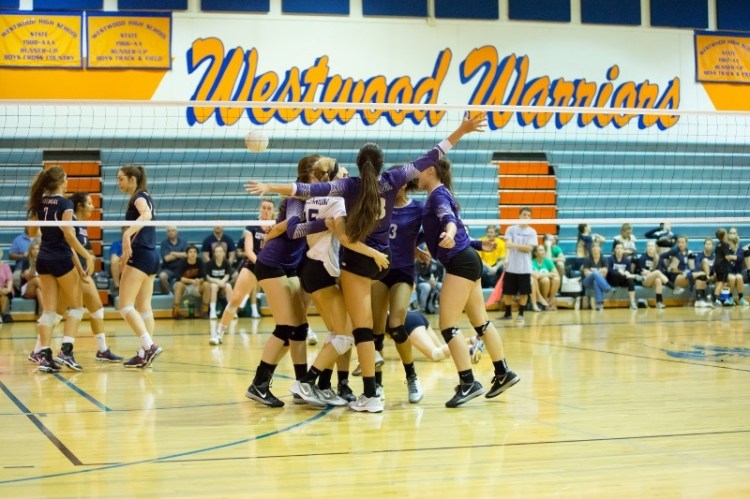
photo cred: Kim Johnson Photography

I might not be as mighty as I once was in the physical sense, but everything I developed in sports is still alive and well (and kicking) in me as a person. So, how will I accomplish my goals, dreams and live out my passions in the new year?

I’m going all-in on what I already know.

Check out these 10 valuable characteristics you are developing through sports – right now.


1. WORK ETHIC: The line is the line. The final score is the final score. Volleyball games are not won at 24, they are won at 25. When I’m coaching and I see a kid who is three feet shy of the line during shuttle runs or lunges, I see a kid who won’t make it very far in higher level sports. You may squeak by on athleticism or size in the early years, but that level of effort will not last. If you are an athlete looking to be a champion, you have to cross the line every time, not just come close. You have to finish all the reps. It’s supposed to be hard, it’s supposed to make you tired and frustrated and, yes, you’ll feel accomplished once you finish.

Coolest thing ever: This work ethic will stick with you forever and be a part of whatever you set your mind and heart to.

2. TEAMWORK: The coach chooses your teammates, you don’t. In any given season, you are asked to work with one, two, five, ten other people. Each of them is different, each of them possess a separate set of skills different than you, some are better than you, some are not but you all have the same goal in mind – to play at the highest level possible and hopefully get that win. If you cannot work well with your team or effectively manage your skill set to work with everyone else, you are not a team player. Period.

Coolest thing ever: Those who manage this well can work with all kinds of people throughout their lifetime, it is an athlete’s adaptability that will make them successful in any arena and make working more fun too.

3. INTEGRITY: I have a quote I came up with a couple years ago:

“Winning at all cost is for the ego, winning with integrity is for the soul,”

I’ve won games at all cost and I’ve ticked off teammates and coaches in the process. But, I’ve won lots more games with integrity. It’s when I know I did my best, busted my tail for every play and never quit. It’s when I didn’t rely on a referee or home court advantage for the outcome. Winning at all cost requires us to compromise something in order to win. It asks us to compromise our integrity. Calling a ball out that was really in (or vice versa) serves no one.

Coolest thing ever: When you win with integrity, it feeds and nurtures your soul. It transcends the game, the field and the court. It makes you a winner in life.

4. PERSEVERANCE: Some days you don’t get out of the drill until you finish the drill. Some days you have a really hard time finishing the drill. A good coach knows what you are made of and will push you to finish, even when you doubt your own ability. Finishing the drill when you are tired, gassed, on the verge of tears is how perseverance is developed. When you want to quit, when you want to be angry, when you want to walk out of the gym…and you don’t…that’s when you develop perseverance and begin to see what you are made of.

Coolest thing ever: When you have a goal or a dream, you know it will be hard to see the finish line from the starting line, perseverance keeps you from giving in when you know there’s more in the tank.

5. PATIENCE: If you’ve been at sports for longer than one season, you know things don’t happen over night. Good things take time, great things take a lifetime. Much like perseverance, patience is a practiced virtue and a discipline. Champions know how to wait things out even when results aren’t immediately visible.

Coolest thing ever: While everyone else clamors for the shiny stuff on the surface, you are developing a character of gold that will shine longer than a sparkle.

6. RESPONSIBILITY: What uniform is your team wearing? Is it clean? What do I need for a full day in the gym for my upcoming tournament? How much food will I need? What will keep me nourished and give me energy throughout the day? What do I need to do between practices to recover: nutrition, mobility work? What school work do I have due before I get on the plane for the next out of state competition? The earlier you take responsibility for yourself, the better. Your mother is not going to college with you.

Coolest thing ever: Your mother is not going to college with you.

7. FEEDBACK: It’s not always fun and it’s not always nice, but you don’t get any better if you cannot take correction or listen to feedback. Coaches know the sport we play and can give us an accurate assessment of our ability and spot areas where we need improving. Athletes are ever changing, ever evolving and on a constant journey to improve. Feedback is an important part of this journey.

Coolest thing ever: Your ability to hear feedback will allow you to adapt and adjust to many situations. You don’t know everything and accepting that will make you a great player in sport and in life.

8. FOCUS: Like perseverance, patience and work ethic; focus helps us set, strategize and execute goals. It is laser pointed efforts to attain something that you want. Perhaps it’s a skill, a particular team, a college scholarship, a personal record in the gym or on the track. Focus requires planning, discipline and dogged determination to follow through.

Coolest thing ever: Once you learn how to focus, even the peskiest distractions cannot get in your way.

9. STRUGGLE: I recently saw something like this posted on social media: “winning isn’t normal.” I loved it. In sports, we learn this to the nth degree. In order to win, you have to work harder and smarter than every one else. Sometimes, despite your best efforts, you still lose. But, the upside is this: losing creates an inner struggle, a struggle we need in order to develop resilience. Struggle leads to resilience leads to getting back up and trying again and again and again…and again (and again).

Coolest thing ever: Losing creates the necessary struggle to develop resilience.

10. STRATEGY: Strategy is the plan you have going into a game. Strategy is how you change that plan when the first plan doesn’t work. Strategy is your mind working all the livelong game/match to adapt and change while you are still playing the game.

Coolest thing ever: Failed strategies lead to adaptability and/or new strategies.

I have many things I want to accomplish in the new year, instead of reinventing the wheel, I’m just going to cash in on some of these beauties and see where they take me. They’ve been good to me so far. Happy New Year, athletes!


photo credit: Jobrina Hofleit Photography

Priscilla Tallman is a freelance writer and social media consultant in Phoenix, AZ. She holds her Crossfit L1 Trainer Certification as well as the CrossFit Mobility Certification and an undergraduate and graduate degree in Clinical Psychology. She is part of the strength and conditioning coaching team for AZ Epic Volleyball at CrossFit Fury and has written for Volleyball Magazine, The Art of Coaching Volleyball, Gorgo Fitness Magazine, CrossFit Fury and the CrossFit Games. She is married with two children and in a former life played collegiate and professional volleyball.